


Research Explores Little-Understood Brain Disease


LEXINGTON, Ky. (Feb. 9, 2011) - The population of aged persons worldwide is expanding rapidly, and it is becoming increasingly clear that there are many different diseases that affect the minds of these individuals. Researchers at the University of Kentucky are breaking new ground in the ongoing project of identifying and defining those diseases most likely to affect an aged population. Dr. Peter Nelson of the University of Kentucky Sanders-Brown Center on Aging is the lead author on a paper soon to be published in the journal BRAIN; the paper deals with the little-understood but serious condition hippocampal sclerosis (HS-AGING). He is also the recipient of a newly approved grant from the National Institutes of Health (NIH) to conduct a study of HS-AGING genetics.
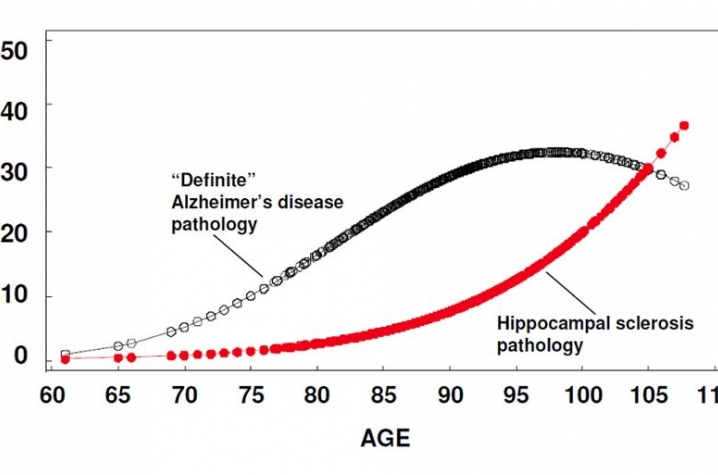
Many different diseases may produce symptoms of dementia - defined as cognitive decline and impaired memory - in aged persons. Although Alzheimer's disease is probably the most recognized cause of dementia, HS-AGING also causes serious cognitive impairment in older adults. In those who live to a very advanced age (beyond the age of 95) HS-AGING is roughly as prevalent as Alzheimer's.
It is important for physicians and scientists to understand the unique pathology of HS-AGING, and to be able to differentiate it from other diseases, as it is only by making an accurate diagnosis that clinicians can hope to treat people who present with signs of cognitive decline.
Nelson, a neuropathologist, analyzed autopsy data from 1,100 individuals, each with substantial clinical data available from before death. The long-term clinical information was obtained through the University of Kentucky Alzheimer's Disease Center, the Nun Study and the Georgia Centenarian Study (all autopsies were performed at the University of Kentucky). The large numbers of patients and the high quality of the data enabled the research team to gather new clues about the prevalence and impact of HS-AGING.
"We and others have shown previously that HS-AGING has a strong impact on cognition. The goal of the new study was to define HS-AGING as a distinct disease entity," said Nelson.
"There were some surprises. The high prevalence of HS-AGING in individuals older than 95 was unexpected. In addition, by analyzing neuropathological data alongside clinical data, we were able to determine that there is a recognizable cognitive profile for individuals likely to develop HS-AGING,” said Nelson.
In the future, clinicians may be able to utilize cognitive tests with increased accuracy to differentiate a diagnosis of HS-AGING from a general diagnosis of cognitive decline. Being able to pinpoint the cause of cognitive decline may lead to better and more accurate diagnosis and treatment of aging individuals who present with signs of dementia.
“This is an extremely exciting paper because it provides the largest study of HS-AGING in the literature to date, by far. These studies help to define the cognitive features, pathological features, and risk factors that correlate with HS-AGING," said Linda Van Eldik, director of the Sanders-Brown Center on Aging and co-author of the paper.
The next step for Nelson will be to use a grant from the NIH (through the Alzheimer’s Disease Genetic Consortium) to study HS-AGING from a genomic approach.
“We want to show the specific genetic fingerprint of HS-AGING so that we can begin to develop ways of better diagnosing and curing the disease during life”, said Nelson.
“Our ultimate goal is to prevent or cure the disease, and a greater understanding of the disorder at the genetic and biological levels is critical. Dr. Nelson’s studies are providing the essential foundation required for translating the science into new therapies for the Commonwealth of Kentucky and well beyond,” summarized Van Eldik.