By
Sesquicentennial Series: The History of the Wildcat
LEXINGTON, Ky. (Oct. 5, 2012) — In celebration of the University of Kentucky's upcoming sesquicentennial in 2015, the 26th of 150 weekly installments on the university looks at the history of the Wildcat mascot.
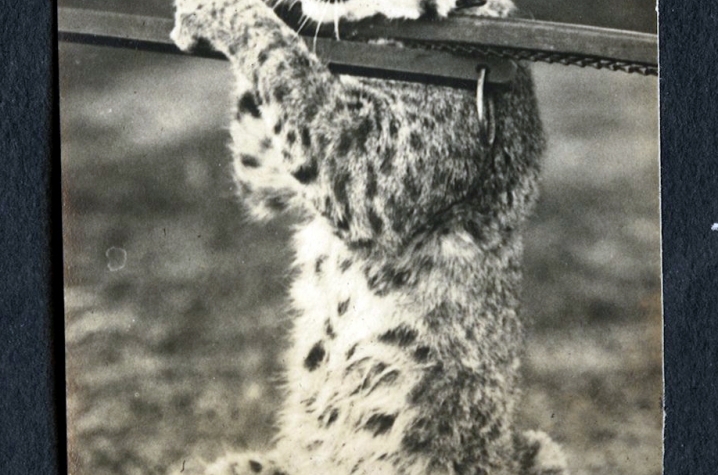
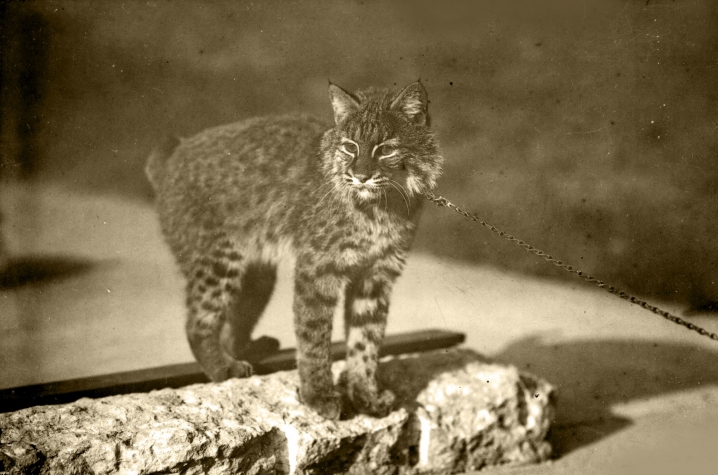
Today’s UK fans are used to seeing the Wildcat mascot at sporting events. The mascot is embodied by a man in a wildcat suit rallying the crowd, dancing and playing pranks. But the history of the wildcat mascot goes back to 1921, when the wildcat was not a man in a suit, but a live bobcat (Lynx rufus, referred to as a wildcat in Kentucky).
The first live mascot, Tom, was purchased by Dick Webb, an assistant football coach. Tom was lauded in the press and paraded out in his cage during games. The wildcat, a human-shy, mostly nocturnal and solitary mammal native to the state, does not take well to captivity. Tom died in less than a year.
He was replaced by TNT the next year, who also died in a few months only to be succeeded by Whiskers. There was a long line of live mascots up until just before World War II, ending with the cats either dying or being released into the wild again.
In 1947, the university’s student newspaper, The Kentucky Kernel, ran an article titled "Live Wildcat Years Ago, Why Not Now?" The article sparked a flurry of alumni activity to set the plan for a new live mascot in order. A 20-pound female cat was captured from the wild in Whitley County and named "The Kentucky Colonel." The Colonel lasted longer than most, and was the mascot for seven years before being sent to the state wildlife farm, where she died of pneumonia.
In the late 1950s, a stuffed wildcat was purchased from a taxidermist and trotted out at games for 10 years. The last live mascot was "Baby" in 1969. Athletic Director Harry Lancaster put an end to Baby's appearances after two games due to a fan's complaints about the cat's treatment.
Happily, for wildcats and animal lovers alike, 1976 saw the beginning of the human-dressed-as-wildcat tradition at UK. Gary Tanner was the first man to portray the mascot. And in 1998, UK revived the tradition of having a live wildcat mascot when they claimed "Blue" as the official UK wildcat, who lives at the Salato Wildlife Center, in Frankfort, Ky., and is never present at events.
This story on UK's history is presented by UK Special Collections. Special Collections is home to UK Libraries' collection of rare books, Kentuckiana, the Archives, the Louie B. Nunn Center for Oral History, the King Library Press and the Wendell H. Ford Public Policy Research Center. The mission of Special Collections is to locate and preserve materials documenting the social, cultural, economic and political history of the Commonwealth of Kentucky.
MEDIA CONTACT: Whitney Hale, (859) 257-8716 or whitney.hale@uky.edu