


How wildfires impact air quality
The University of Kentucky Public Relations & Strategic Communications Office provides a weekly health column available for use and reprint by news media. This week's column is by Anthony Gerber, M.D., the division chief of pulmonary, critical care and sleep medicine at UK HealthCare.
LEXINGTON, Ky. (July 22, 2026) — Ongoing wildfires in Canada and Minnesota led to poor air quality and alerts from the National Weather Service across parts of the U.S., including several counties in Northern Kentucky and surrounding states.
Smoke from wildfires can travel hundreds and sometimes thousands of miles, causing the air quality index (AQI) to reach dangerous levels. Due to the smoke’s fine particles, it’s picked up by the wind, lifted into the atmosphere and pushed into surrounding areas.
During my tenure as a member of the Colorado Air Quality Control Commission and in my years as a practicing pulmonologist, I’ve seen first-hand how poor air quality can impact public health.
Patients with lung disease can have worsening breathing symptoms, and in some cases, care needs can escalate to visits to the emergency room and even hospitalization. It is important for patients with pre-existing lung or heart disease to be on the lookout for worsening symptoms when the air quality is poor, and to make sure they have an action plan in place to deal with any flare-ups.
When does air quality become dangerous?
The AQI is measured on a range of 0-500 with 0-50 being good and 301+ being hazardous. The index is as follows:
- 0-50: The air quality is good. It poses little or no risk to your health or safety.
- 51-100: The air quality is moderate; this is typically where Kentucky falls. This AQI is acceptable, but it may irritate people who are unusually sensitive to air pollution.
- 101-150: The air quality is unhealthy for sensitive groups. Most people are unlikely to be affected, but those at higher risk, including people with COPD, lung disease or heart disease, and other conditions may be at risk.
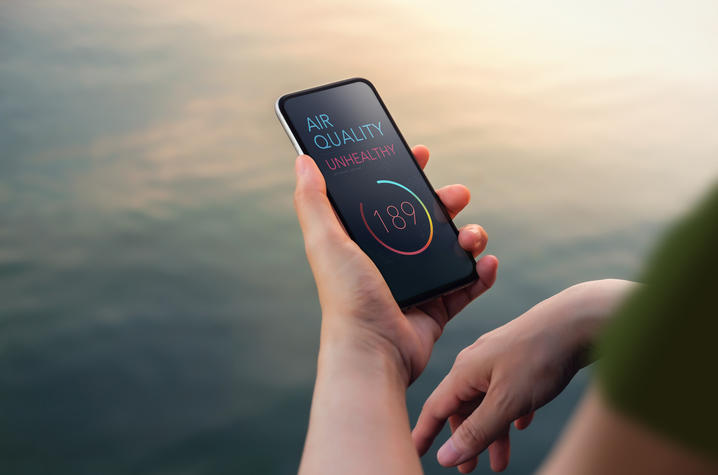
- 151-200: The air quality is unhealthy. Some individuals may experience health effects, and those at higher risk may have more serious side effects.
- 201-300: The air quality is very unhealthy. This AQI calls for a health alert; health effects are increased for everyone.
- 301 and higher: The air quality is hazardous and is considered an emergency health warning; everyone is more likely to be affected.
What are the potential health effects?
Unhealthy and hazardous air quality can cause both short-term and long-term health effects. The general public might immediately notice coughing, sore throat, wheezing, shortness of breath, headaches, fatigue and irritated eyes, and it can worsen conditions like asthma and COPD.
Over time, repeated exposure may increase the risk of heart attacks, strokes, pregnancy complications, certain cancers, dementia and reduced lung growth in children.
How to stay safe during air quality alerts
If the air quality in your area reaches an unhealthy level or if you are a member of a sensitive group, it’s important to take precautions.
- Stay indoors: Keep your doors and windows tightly sealed and avoid exercising outside during high pollution days.
- Filter your air: Turn your air conditioner to recirculation mode and use a HEPA air purifier if you have one.
- If you must go outside and your air is hazardous, wear a well-fitting KN95 mask.
- Utilize the AirNow mobile app for real-time air quality reports.
By staying informed and taking precautions when air quality declines, you can reduce your exposure to harmful pollutants and protect your health. Monitor local air quality alters and take extra care during periods of wildfire smoke, especially if you have any underlying heart or lung conditions.
UK HealthCare is the hospitals and clinics of the University of Kentucky. But it is so much more. It is more than 10,000 dedicated healthcare professionals committed to providing advanced subspecialty care for the most critically injured and ill patients from the Commonwealth and beyond. It also is the home of the state’s only National Cancer Institute (NCI)-designated Comprehensive Cancer Center, a Level IV Neonatal Intensive Care Unit that cares for the tiniest and sickest newborns and the region’s only Level 1 trauma center.
As an academic research institution, we are continuously pursuing the next generation of cures, treatments, protocols and policies. Our discoveries have the potential to change what’s medically possible within our lifetimes. Our educators and thought leaders are transforming the healthcare landscape as our six health professions colleges teach the next generation of doctors, nurses, pharmacists and other healthcare professionals, spreading the highest standards of care. UK HealthCare is the power of advanced medicine committed to creating a healthier Kentucky, now and for generations to come.