


Staging explained: Understanding the severity of a cancer diagnosis
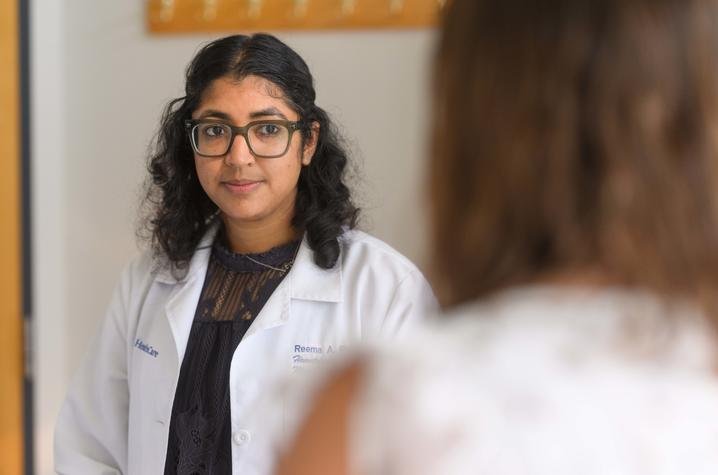
The University of Kentucky Public Relations and Strategic Communications Office provides a weekly health column available for use and reprint by news media. This week’s column is by Reema Patel, M.D., medical oncologist with the UK Markey Cancer Center.
LEXINGTON, Ky. (Sept. 21, 2026) — Receiving a cancer diagnosis can be daunting enough, and hearing terms like “Stage 3” or “Stage 4” can be even scarier. But what do these numbers mean?
Staging is the way physicians will measure how much cancer is in the body. When cancer is diagnosed, oncologists will assign it a stage based on information they’ve gathered during hospital or clinic visits: physical examinations; imaging like X-rays, mammograms, CT and PET scans; biopsies and more.
An initial staging may change and become more precise after treatment, especially when tumors are removed through surgery and can be sent to a lab for further testing.
Breaking down the stages
Staging for solid tumors can vary based on the type of cancer, but it generally falls into five categories: Stage 0 through Stage 4 (blood cancers are staged in a different way). The main three factors that physicians use for staging are the tumor size and/or growth, whether nearby lymph nodes are affected, and whether it has spread beyond where it originally began growing (known as metastasis).
These are general guidelines to understand how staging is determined, but keep in mind that there are differences in cancer types:
- Stage 0: A cancer that’s diagnosed extremely early; abnormal or precancerous cells that may not even have formed a cancer yet. These cells are contained to a very small, localized location. You may have also heard the Latin phrase in situ used with these cancers in a formal diagnosis, such as “squamous cell carcinoma in situ” (a Stage 0 skin cancer). In situ means “in its original place.”
- Stage 1: A small tumor occurring in one area of the body; the cancerous cells have not spread anywhere else.
- Stage 2: Larger tumors. At this stage, cancer might also be in the lymph nodes, though that is not always the case.
- Stage 3: A tumor that’s beginning to spread; it’s grown into other surrounding tissues and likely extending to nearby lymph nodes.
- Stage 4: The original cancer has spread to other sites of the body, to organs near or far. For example: lung cancer with metastasis to the brain would be a stage 4 lung cancer.
Your provider may also include a letter — A through D — to further categorize each numbered stage based on size and lymph node involvement.
The reason preventative cancer screenings like colonoscopies, mammograms or low-dose CT scans are so important is because regular screening is more likely to find a cancer at its earliest stages – 0-2 – when it’s the most treatable or even curable.
Why does staging matter?
Assigning stages for cancers is important for both patients and their healthcare providers. Physicians use staging to help determine a precise treatment plan, because different stages require different approaches. Having set guidelines that dictate the stage of a cancer helps all of a patient’s care providers understand the disease they’re working to treat.
It also supports research and future treatments. Clinical trials often use data on cancer staging to help inform their protocols, and many trials are developed for cancers in specific stages. Healthcare providers can use staging to find potential new therapeutic options in open clinical trials and to develop a prognosis and outcomes.
Additionally, it helps patients understand the severity of their disease. A Stage 4 cancer could be more difficult to treat than a Stage 1 cancer. However, a Stage 4 cancer does not always mean the person doesn’t have long to live — but it may mean a physician recommends a more aggressive treatment plan than what could have been done at an earlier stage.
Overall, patients with all stages of cancers have much better outcomes when they receive care from a team of providers from different specialties, known as multidisciplinary care. At the UK Markey Cancer Center, we have entire physician teams dedicated to specific types of cancer as well as pathologists, pharmacists, lab researchers, physical therapists and more who work together to provide care, ensuring every patient gets the specialized treatment they need for their particular cancer.
UK HealthCare is the hospitals and clinics of the University of Kentucky. But it is so much more. It is more than 10,000 dedicated healthcare professionals committed to providing advanced subspecialty care for the most critically injured and ill patients from the Commonwealth and beyond. It also is the home of the state’s only National Cancer Institute (NCI)-designated Comprehensive Cancer Center, a Level IV Neonatal Intensive Care Unit that cares for the tiniest and sickest newborns and the region’s only Level 1 trauma center.
As an academic research institution, we are continuously pursuing the next generation of cures, treatments, protocols and policies. Our discoveries have the potential to change what’s medically possible within our lifetimes. Our educators and thought leaders are transforming the healthcare landscape as our six health professions colleges teach the next generation of doctors, nurses, pharmacists and other healthcare professionals, spreading the highest standards of care. UK HealthCare is the power of advanced medicine committed to creating a healthier Kentucky, now and for generations to come.