


One year later, Golisano gift shapes the future of Kentucky’s kids
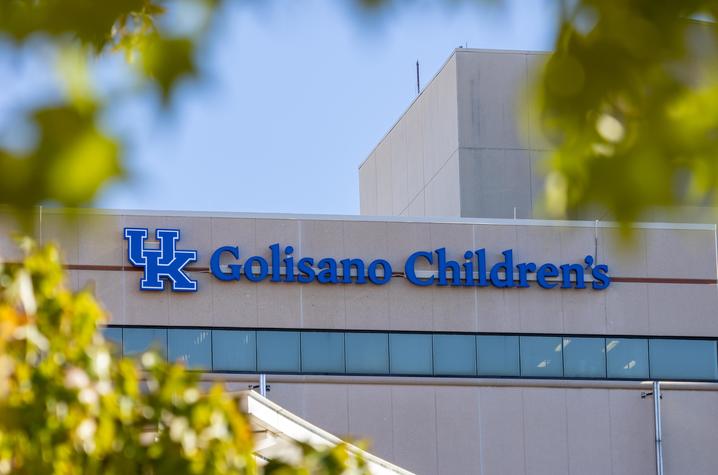
LEXINGTON, Ky. (Oct. 23, 2026) — One year ago, the children’s hospital at UK HealthCare was one of six hospitals to receive a transformative gift from New York philanthropist Tom Golisano. The gift of $50 million didn’t just bolster pediatric care and bring ambitious plans to fruition, it gave the hospital a new name — Golisano Children’s at UK.
The hospital’s mission remains the same — ensuring the children of Kentucky have access to the most advanced care, no matter where they live. That mission aligned exactly with the Golisano Foundation’s vision for the future of pediatric care.
“A child’s need for care doesn’t change because they live in a remote part of Kentucky,” said Scottie B. Day, M.D, vice president of children’s health for UK HealthCare and physician-in-chief of Golisano Children’s at UK. “Families in rural communities face real gaps in access to specialized pediatric care, and we have a responsibility to meet those needs. Mr. Golisano’s gift gives us an opportunity to strengthen care across the commonwealth and bring more pediatric expertise within reach of the families who need it.”
That gift, the largest in UK HealthCare’s history, has done more than improve hospital facilities, improve specialty services and expand outreach throughout the Commonwealth; it opened the doors of collaboration with children’s hospitals across the country through the Golisano Children’s Alliance. With the support of their gifts from the Golisano Foundation, providers, administrators and staff from 15 children’s hospitals formed a network to collaborate on strengthening all aspects of pediatric care, ensuring that a child’s health and quality of life should not depend on their ZIP code.
“With exceptional leadership and profound medical expertise, this hospital has shown a remarkable willingness to think big about the future of pediatric care for children and families in this region,” said Golisano. “Sharing their skills and learning across the Golisano Children’s Alliance will extend this hospital’s impact and strengthen healthcare nationwide.”
In its first year as UK Golisano Children’s, a committee comprised of administrators and providers solicited proposals from all areas of pediatric care to identify projects that aligned with the spirit and intent of Golisano’s gift. Of the 59 proposals submitted, the committee selected 10 for the inaugural round of funding.
Making room for new possibilities
The inpatient unit of UK Golisano Children’s occupies the fourth floor of UK HealthCare’s Albert B. Chandler Hospital. The neonatal intensive care unit is on the first floor, and the behavioral health unit is on the hospital’s third floor. During the busy respiratory season, parts of the fifth floor are populated by pediatric patients. The hospital’s inpatient capacity hovers around 100% most of the time. The need for a larger, centralized inpatient unit has never been greater. Chandler Hospital’s last expansion, a 12-floor tower dedicated to adult care, opened in 2011. Since then, there have been discussions about another addition, one dedicated to the care of Kentucky’s pediatric population. Thanks to the generosity of Tom Golisano, that distant dream is becoming a reality.
“This opportunity empowers us to broaden and enhance the services we provide to Kentucky’s children, creating an impact that goes well beyond bricks and mortar,” said Tim Slocum, senior vice president and chief operations officer of UK HealthCare. “I’m really excited about the delivery of this project and what it means for the Commonwealth. We exist to create a healthier, wealthier and wiser Kentucky, and this gift helps us do exactly that.”
The hospital’s outpatient clinics face similar constraints. In 2022, UK Golisano Children’s, then called Kentucky Children’s Hospital, entered into a partnership to occupy part of a building formerly occupied by Shriner’s Hospital. There, three specialty pediatric clinics, Complex Care Clinic, Developmental Pediatrics Clinic and the NICU Graduate Clinic, came together under one roof to support patients with highly complex medical and developmental needs. Part of the building remained unrenovated, awaiting the funding necessary to complete the quartet of specialized services for children with complex needs: the Child Neurology Division.
“Imagine a child who is in a wheelchair and relies on a ventilator,” said Carol Steltenkamp, M.D., founding medical director of Golisano Children’s at UK – Richmond Road. “They can come to the Richmond Road clinic and see a physical therapist, a neurologist and a developmental pediatric provider in a single visit. It’s coordinated care made simpler, safer and far more accessible for families who need it most.”
Where physical and mental health meet
Kentucky is in the throes of a youth mental health crisis; each new tech advancement raises questions about its effects on adolescents and teens. Since 2013, the number of mental health-related visits at the UK Golisano Children’s emergency department has increased 500%. Amy Meadows, M.D., chief of the division of child and adolescent psychiatry, said early intervention is the key to addressing mental health concerns; those conversations should be a routine part of a child’s annual visit with their pediatrician.
“We already ask about smoking or blood pressure,” said Meadows. “We should ask routinely about mental health, too. It reduces stigma and gives kids space to speak openly.”
Robyn Morris, a licensed clinical social worker in the division of pediatric psychiatry, championed the implementation of the Zero Suicide Academy, a training program for health providers seeking to reduce suicides among those in their care. With funds from the Golisano gift, mental health professionals will embed into the hospital’s specialty clinics, equipping all staff — from providers to frontline schedulers — with the tools to recognize and respond to signs of distress.
“Universal suicide screening in medical settings creates an important opportunity to identify patients who may be struggling, even when they haven’t expressed their concerns or sought mental health support,” said Morris. “By making these conversations a routine part of healthcare, we help reduce stigma, open the door to meaningful intervention, and ensure patients don’t have to navigate a crisis alone. I’m incredibly grateful for our Crisis Assessment, Resolution and Engagement (CARE) team and their dedication to responding to positive screens with compassion, timely assessment, safety planning, and connection to support. Screening helps us identify the need, and the CARE team helps us turn that opportunity into action, support, and hope. Golisano funding has been instrumental in supporting the growth and expansion of our CARE team, strengthening our ability to respond to patients at risk for suicide and connect more children and families with timely, compassionate support.”
However, when a child’s physical health is at stake, the concern for their mental health often takes a backseat when it comes to medical intervention. Meghan Marsac, Ph.D., chief of the division of pediatric psychology and co-director of the Center for Pediatric Traumatic Stress, said the emotional stress that comes with serious illness or injury can have an even greater and longer lasting impact than their physical malady.
“Millions of youths who have medical conditions also experience mental health symptoms, such as medical traumatic stress,” said Marsac. “Entire families can be affected, and resources to support emotional wellness during trying times can be scant and inconsistent.”
Funds from the Golisano gift will support the Rupp Family Fellowship, a program launched to expand access to specialized pediatric psychology services and strengthen the future workforce. The fellowship combines clinical training with academic mentorship, preparing early-career psychologists to plug into a field of health care that is currently under-resourced in the Commonwealth.
Children often feel the effects of medical traumatic stress most profoundly in a hospital setting. The unfamiliar setting, sensory overload and unpredictable routine can lead to meltdowns — which, in turn, can affect their health as well as impact their providers’ ability to deliver care. Alyssa Frye, Psy.D., clinical psychologist at UK Golisano Children’s, believes the key to preventing a meltdown is knowing what caused it in the first place. Board-certified behavioral analysts can identify the root causes of behaviors, and chart a path that supports the child, their family and their care team. The result is not only an enhanced sense of calm and safety, but patients feel they have more autonomy in their own care, leading to more adherence to treatment and an overall improved hospital experience.
“It’s a win-win-win,” said Frye. “Hospital staff have a resource to help children with their unique needs; those children are surrounded with love and comfort tailored specifically for them and families are armed with tools to help their children once they return home.”
Collaboration leads to innovation
Throughout history, every major medical intervention began with a question. Questions lead to experiments, followed by breakthroughs before finally culminating with a cure. As an R1 institution, the University of Kentucky has long been a hub of discovery and innovation. John Bauer, Ph.D., vice chair of research in the UK Department of Pediatrics and chief of the division of pediatric research, believes that the future of modern medicine can begin right here in Kentucky. By investing in people and research facilities, Bauer and his team can identify projects poised for scalability and real-world impact. In the past year, the Golisano gift supported research in genetics and immune dysregulation, pediatric obesity, hypertension, neurodevelopment, autism and neonatology, and mental health for children with complex medical needs.
“These teams have woven research into normal clinical flow, making their work more efficient and more productive,” said Bauer. “Especially as we expand throughout the Golisano Children’s at UK - Affiliate Network and ultimately to other hospitals in the Golisano Children’s Alliance.”
Empowering kids in foster care
In Kentucky, there are more children who need out-of-home care than there are families to house them. The foster care crisis extends beyond a dearth of qualified foster families; there is also a lack of provider and law enforcement training, resources for at-risk families and support for children in foster care as they transition to independent living.
With support from the Golisano gift, Christina Howard, M.D., chief of the division of pediatric forensic medicine, and Ginny Sprang, Ph.D., executive director of the UK Center on Trauma and Children, established the Institute on Fostering Resilience to provide infrastructure and resources that support the continuum of care for at-risk kids — not just the children themselves, but also the families and professionals responsible for caring for them.
“Our strategy was to come at the problem from every perspective — providers, families and kids,” said Howard. “Data-informed, sustained support and interventions can lift children out of trauma or, we hope, prevent it altogether.”
Child Life as a lifeline
Child life specialists occupy a unique part of a patient’s care team. Whether a child is prepping for a major surgery or a flu shot, Child Life is there to help take away the fear. They have a few tricks up their sleeves for helping patients and their families cope with being in the hospital. Playing with dolls and action figures is a subtle way to demonstrate a surgical procedure; dance parties are disguised as motor skill development. And in the hospital, holidays, birthdays and medical milestones are celebrated with all the pomp and cheer imaginable.
Child life specialists possess a highly sought-after set of skills; as such, their profession is much in demand, and there aren’t enough specialists to go around. Enter the Accelerated Master’s Program for Child Life, housed in UK’s Martin-Gatton College of Agriculture, Food and Environment. Through this new academic-clinical partnership, students acquire their bachelor’s and master’s degrees and internship in just five years before entering the workforce. Golisano funding for the academic program and intern stipends enhances the appeal for students and strengthens UK’s ability to retain graduates in staff roles.
The best care — everywhere
For many families in Kentucky, the biggest obstacle to accessing specialized care is getting there. It’s a long drive to Lexington — one that requires a reliable car, gas money and the ability to take off work. Logistical and financial barriers exacerbate the stress of medical treatment. Additionally, it’s been well documented that patients have better outcomes when they can stay close to their homes and support systems. So, UK HealthCare brings care to their communities via the affiliate network.
Golisano Children’s at UK – Affiliate Network is among the first hospital networks in the country centered around pediatric care. Since launching in 2025, 12 community hospitals have signed on as affiliate members. Benefits for affiliate hospitals include continuing education credit opportunities for staff, using high-fidelity pediatric simulation equipment that gives community clinicians hands-on experience with real-world scenarios. The Golisano gift made it possible for UK HealthCare providers to deliver high-tech, onsite training to their affiliate colleagues around the state.
“Kids are our future, and not every child has the same start to life,” said Christina Briggs, director of the Golisano Children’s at UK – Affiliate Network. “Nearly 40% of Kentucky counties have no pediatricians at all. Families shouldn’t have to travel hours to get their children the health care they need. This network helps make things a little more equal by ensuring every community has access to pediatric care.”
***
One year after Golisano’s gift, these efforts are taking shape in new spaces for care, stronger support for children and families and partnerships that reach beyond Lexington. The work ahead is to build on that momentum, so more Kentucky children can get the care they need — wherever they call home.
“We are deeply grateful to Mr. Golisano for believing in Kentucky’s children and in the people who care for them,” said Day. “His gift gives us the chance to think bigger about what families need — not only within our hospital, but in communities across the commonwealth. Every child and family we serve is the reason we do this work, and they will remain at the heart of what we build next.”
UK HealthCare is the hospitals and clinics of the University of Kentucky. But it is so much more. It is more than 10,000 dedicated healthcare professionals committed to providing advanced subspecialty care for the most critically injured and ill patients from the Commonwealth and beyond. It also is the home of the state’s only National Cancer Institute (NCI)-designated Comprehensive Cancer Center, a Level IV Neonatal Intensive Care Unit that cares for the tiniest and sickest newborns and the region’s only Level 1 trauma center.
As an academic research institution, we are continuously pursuing the next generation of cures, treatments, protocols and policies. Our discoveries have the potential to change what’s medically possible within our lifetimes. Our educators and thought leaders are transforming the healthcare landscape as our six health professions colleges teach the next generation of doctors, nurses, pharmacists and other healthcare professionals, spreading the highest standards of care. UK HealthCare is the power of advanced medicine committed to creating a healthier Kentucky, now and for generations to come.