


From farm shows to front lines: UK College of Nursing delivers lifesaving care to rural Kentuckians

LEXINGTON, Ky. (March 17, 2026) — Twenty-five people across Kentucky have now credited the people and partners behind Raising Hope for saving or significantly improving their lives.
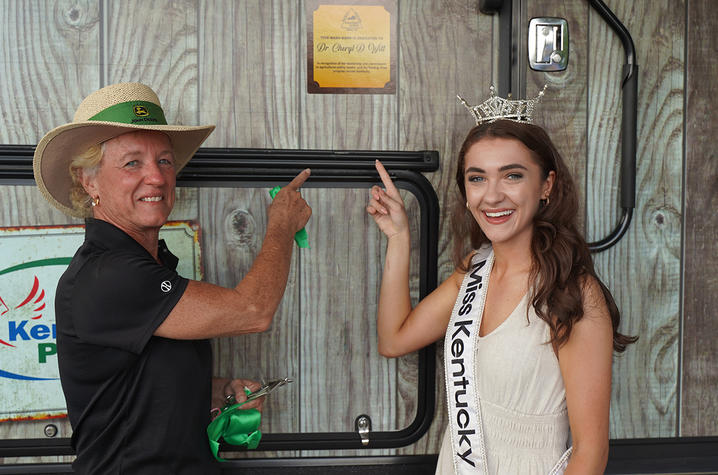
Cheryl Witt, Ph.D., associate professor and assistant dean for undergraduate programs at the University of Kentucky College of Nursing and agricultural health extension specialist in the Martin-Gatton College of Agriculture, Food and Environment, beamed as she recalled those who returned and thanked the Raising Hope team for providing preventive care. Witt remembered one farmer who took advantage of a carotid artery screening, and it was found to be 98% blocked.
“We referred him immediately to a vascular surgeon,” Witt said while standing just outside the health screening pavilion at the National Farm Machinery Show in Louisville. “We’ve made impacts on people’s health, and we’ve caught something maybe they didn’t know they had.”
What began as a vision shared by Witt and other rural health and safety advocates has grown into one of Kentucky’s most impactful public health collaborations — one that is providing UK College of Nursing students with meaningful, hands-on clinical experiences.
A partnership rooted in need
Raising Hope, an initiative administered by the Kentucky Department of Agriculture (KDA), was created in 2020 to promote the physical and mental health of Kentucky’s farmers and farm families through research, prevention strategies and community-based outreach. The initiative was a complementary companion to KDA’s award-winning Farm Safety and Health program, led by safety director Dale Dobson for more than 25 years.
Witt, who is often called the “Ag Nurse,” said the need was clear. More than 95% of Kentucky farms are small, family-run operations, and farmers often face significant barriers to health care access — long distances, limited time, cultural expectations and a deep-rooted self-reliance that can prevent them from seeking preventive care.
“We did an informal survey about rural health care, and there was a statistical difference between men who saw a health care provider on an annual basis versus women,” Witt said. “Most women are encouraged to get their annual checkups, but men typically don’t seek preventive screenings. Even with things like colon cancer, if you catch it early, you have a 91% chance of living a perfectly normal life. So, why not bring those screenings to the farmers and provide education and postpone the inevitable?”
Raising Hope travels the state and nation, training farmers and first responders in rural safety, health and rescue. The boots-on-the-ground approach — meeting farmers where they are, rather than waiting for them to seek care — became a cornerstone of Raising Hope’s model.
Thanks to strong support from state leadership — including Agriculture Commissioner Jonathan Shell — the Raising Hope Safety, Health and Rescue team has expanded. The Kentucky General Assembly recently doubled the program’s budget to $1 million annually for two consecutive fiscal years, enabling even more outreach and services.
Training the next generation of rural health nurses
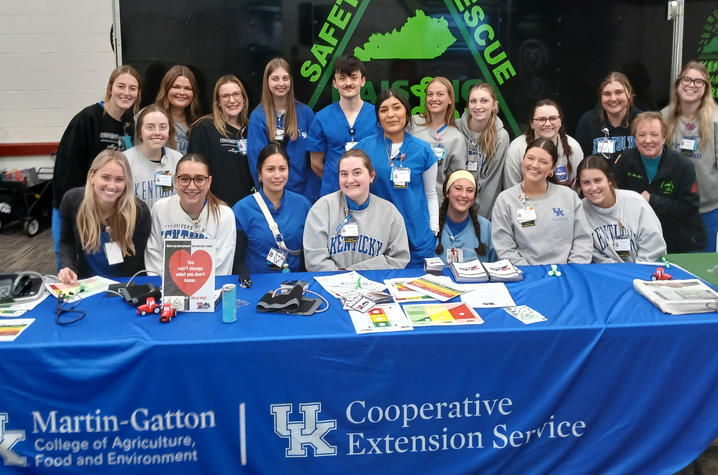
For UK nursing students, Raising Hope provides an experience unlike any traditional clinical rotation. Instead of hospital floors, they find themselves at farm shows, county events and community gatherings, embedded directly in Kentucky’s agricultural culture.
Witt explained that this exposure builds cultural humility and prepares students to care for rural populations like those they will most likely serve, no matter where they practice in the Commonwealth.
“In any nursing practice, you want to make sure you are respectful of all cultures, and farm life is a culture,” Witt said. “Not only do they get the hands-on experience, but they are also exposed to that culture, and it enhances that part of their practice. We also use this as a recruitment tool for rural nurses. There's a nursing shortage everywhere, but especially in our rural areas.”
Senior nursing students Amelia Vogel and Candace Townsend described the work as part education and part advocacy — helping farmers understand their health risks, receive screenings and connect with doctors to prevent future hospitalizations.
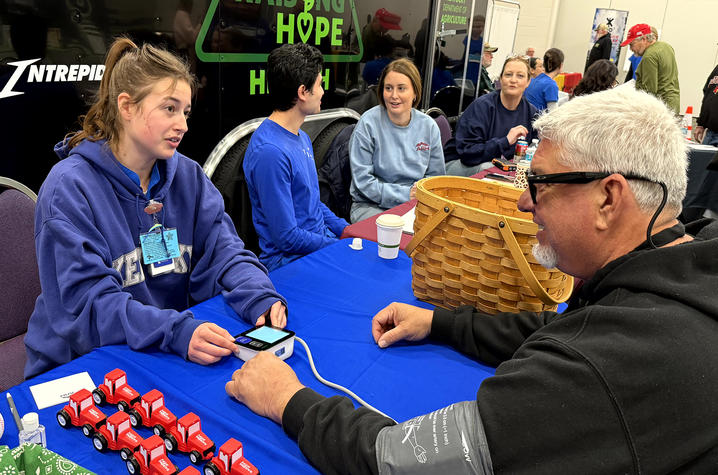
“I talked to a farmer the other day who said the closest hospital is an hour away, and they don’t have a primary care physician,” Townsend said. “Or they haven’t seen them in 10-plus years. That happens a lot, so we’re here with Raising Hope and their partners to do blood pressure checks, EKGs and other screenings. We are trying to get the ball moving on farmers’ health.”
Both students agreed that working through Raising Hope is a great opportunity to learn what public health advocacy is really like.
“A lot of our clinical experiences are in the hospital with people who are already sick,” Vogel said. “Here, we are advocating for them to get screenings and get with doctors for checkups so they don’t end up in the hospital. Public health clinicals are working to make health care accessible.”
Senior nursing student Paige Runice explained how this rotation introduced her to an aspect of nursing almost never discussed in the classroom: the complex intersection of occupational and rural health.
“As we talk to them and do the screenings, we are finding that they are not seeking the help they need because they think they can manage it on their own,” Runice said. “And thankfully, we have been able to catch some of these serious issues that are going on.”
Clinical impact in real time
The UK College of Nursing offers a wide range of health screenings with the assistance of Appalachian Regional Healthcare.
From blood pressure and A1C checks to EKGs and carotid ultrasounds, these screenings are crucial for detecting cardiovascular risk and chronic disease in their early stages and have identified life-threatening conditions that farmers never knew they had.
Witt explained that during the National Farm Machinery Show event, students and their mentors discovered someone was in new atrial fibrillation, which puts a person at a higher risk for a stroke.
The program’s mental health support, provided through the UK-administered Southeast Center for Agricultural Health and Injury Prevention, has been equally critical. Coordinators have fielded crisis calls in the middle of the night and helped farmers access emergency and long-term resources — another reason for the growing list of lives saved.
Farmers feel the difference
For farmers like Richard West of Lewisburg, the impact is deeply personal. After losing his mother to colon cancer at 58, he now takes advantage of every screening available.
“It was a wake-up call,” West said. “I had my first colonoscopy at 36, and they found two polyps. Now I get regular check-ups. Colon cancer is treatable with regular check-ups.”
He also explained that while he never thought he would be one to worry about skin cancer, he has had a few pre-cancerous spots removed. He credited the Raising Hope program for encouraging him to have more regular health screenings.
Michael Oliver, a farmer in Cadiz, Kentucky, learned the severity of his hearing loss while at the Farm Machinery Show. Heuser Hearing Institute, which partners with Raising Hope at farmer health screening events, fitted Oliver with hearing aids within a couple of days of his hearing test. He told Witt that he was looking forward to finally hearing his grandson speak, a child who could only whisper due to an illness.
A mission of accessibility
In Witt’s words, the message is simple: All Kentuckians deserve access to care, no matter where they live.
“Raising Hope will come to a group of two or 200 — and we will show up ready to help.”
From student education to farmer well-being, the program’s impact is evident.
“I think it’s important for us to be here to advocate for farmers who aren’t advocating for themselves and to get them the help they need,” Runice said. “They do a lot for us, and it’s important for us to do a lot for them.”
As the state’s flagship, land-grant institution, the University of Kentucky exists to advance the Commonwealth. We do that by preparing the next generation of leaders — placing students at the heart of everything we do — and transforming the lives of Kentuckians through education, research and creative work, service and healthcare. We pride ourselves on being a catalyst for breakthroughs and a force for healing, a place where ingenuity unfolds. It's all made possible by our people — visionaries, disruptors and pioneers — who make up 200 academic programs, a $1.02 billion research and development enterprise and a world-class medical center, all on one campus.