


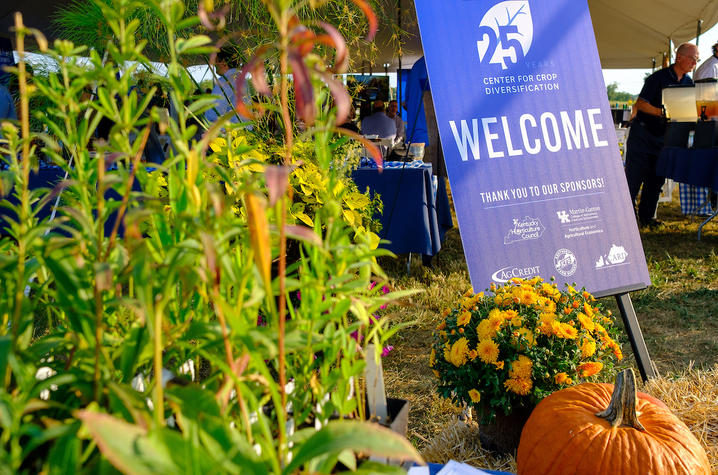
UK Center for Crop Diversification celebrates 25 years helping farmers, small businesses thrive
LEXINGTON, Ky. (Dec. 10, 2025) — In 2000, the University of Kentucky Departments of Horticulture and Agricultural Economics at the Martin-Gatton College of Agriculture, Food and Environment (CAFE) collaborated and created the New Crop Opportunities Center. Recognizing the importance of identifying other new potential crops that farms could grow, the Center for Crop Diversification (CCD), part of the UK Cooperative Extension Service, was introduced in 2013.
For 25 years, the CCD has produced and curated relevant, accessible resources including publications, price reports, events, videos and trainings — “meeting Kentucky producers where they are,” according to Brett Wolff, senior extension specialist and CCD co-director.
“Our mission is to help farmers and businesses plan, grow and market better,” Wolff said. “Being part of the Cooperative Extension Service, we have access to the 120-county outreach arm of the University of Kentucky, which is amazing but also an important responsibility to serve the Commonwealth.”
Getting out in the community
For 25 years, the CCD has introduced a number of impactful programs that have helped shape Kentucky and beyond. Some of the many programs offered include Marketing for All, the Horticulture BizQuiz, Community Supported Agriculture (CSA) Support, Farmers Market and Produce Auction Price Reports and Enterprise Budgets.
Since 2013, CCD has led a regional specialty group called the Southern Extension and Research Activity (SERA-45) collaborative — advancing specialty crop research and outreach across multiple states. The program coordinates price reporting, networking toward regional collaboration, and discussions of resource needs related to crop diversification, horticulture (fruit, vegetable and nursery crops), agricultural economics, sustainable agriculture and organic production.
Additionally, the CCD invests in the future of food and agriculture systems in Kentucky through the undergraduate fellowship program, designed for college students interested in learning more about specialty crops.
For Alexis Sheffield, UK Extension specialist and CCD co-director, each of these programs and events reinforces their mission to strengthen Kentucky’s specialty crop sector — contributing to resilient local food systems and agricultural research and serving as the primary source of information for people.
“We’re able to be that one source and if they need something more specific, we can call on an economist or an entomologist. We know who to ask,” Sheffield said. “We also know how to bring those people together and getting UK out into the communities, getting it out to the agents and supporting them in the counties.”
Sheffield and Wolff, along with the Bourbon and Mercer County Extension agents Ray Tackett and Jessica Bessin, co-host Hort Culture — a weekly podcast dedicated to the production, marketing and joy of planting and growing seeds. The podcast now has nearly 150 weekly episodes and ranks in the top 10 global podcasts, according to Listen Notes.
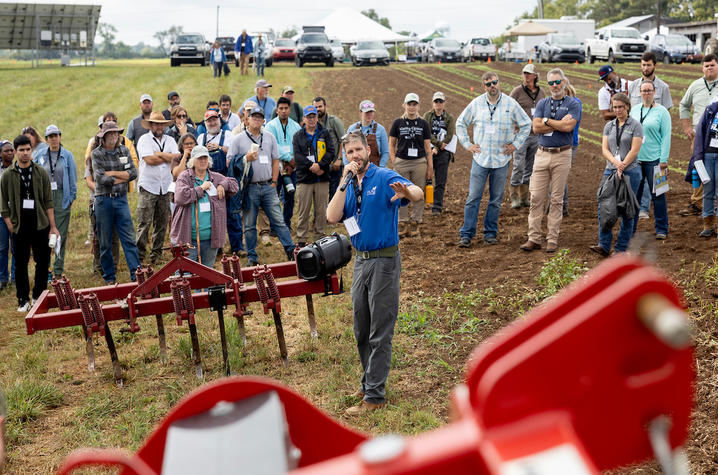
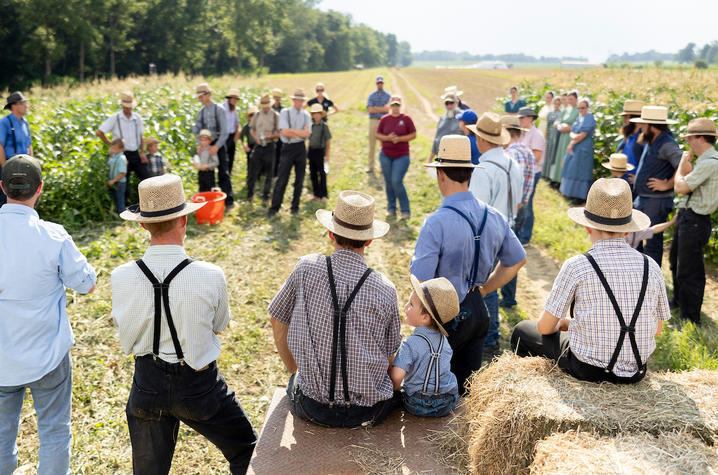
In addition, the CCD recently co-hosted the first Kentucky Mechanical Weed Control Field Day with the Organic Association of Kentucky and Glacial Drift, providing growers with hands-on opportunities to learn about weed control.
Meeting Kentucky’s needs and beyond
For Kentucky agents, CCD’s people and online information “is more useful than ever before” according to Beth Wilson, horticulture agent in Pulaski County.
“The CCD team clearly knows what agents and growers, both experienced and new, need or find useful,” Wilson said. “I also value the team’s synergistic collaborations with other groups and organizations to make the website and information within it more relevant.”
Tackett, the horticulture agent in Bourbon County, said CCD’s initiative and programs are continuing to become more popular among participants.
“Witnessing the growth and enthusiasm of the participants has been incredibly rewarding,” Tackett said, “We are improving our operations and connecting more deeply with the communities we feed and serve.”
The CCD has been a trusted hub of resources, training and tools to help farmers and food entrepreneurs learn, grow and profit over the last 25 years. For Wolff, it’s their people that make the difference.
“There are so many people that have worked hard for and with us for the last 25 years to help the center grow into something truly special,” Wolff said. “We are all here to advance the collaborative land-grant spirit, which is at the heart of our work. We look forward to the next 25 years of service, creativity and collaboration.”
Along with Wolff and Sheffield, the CCD team includes Savannah Columbia, Extension associate of small farm management and MarketReady program; Emily Spencer, senior Extension associate of small farm marketing; and Tim Woods, Ph.D., Extension professor of agricultural economics.
To learn more about the UK Center for Crop Diversification, visit https://ccd.uky.edu.
As the state’s flagship, land-grant institution, the University of Kentucky exists to advance the Commonwealth. We do that by preparing the next generation of leaders — placing students at the heart of everything we do — and transforming the lives of Kentuckians through education, research and creative work, service and healthcare. We pride ourselves on being a catalyst for breakthroughs and a force for healing, a place where ingenuity unfolds. It's all made possible by our people — visionaries, disruptors and pioneers — who make up 200 academic programs, a $1.02 billion research and development enterprise and a world-class medical center, all on one campus.