


‘Uncharted territory’: One mother’s advocacy rallies a multidisciplinary team
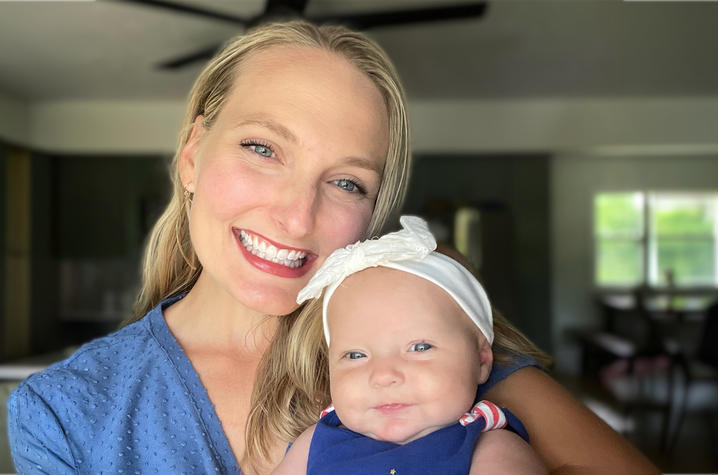

LEXINGTON, Ky. (July 27, 2026) — As any parent will tell you, there are no words to describe the feeling when you discover your newborn child has a serious, lifelong condition. A million questions race through your mind: Should I have done something differently? Is there anything that would have changed the outcome if I had known sooner?
During a routine ultrasound in her 20th week of pregnancy, Ali Grise of Richmond was told there was an irregularity in the imaging. Her baby’s intestines appeared unusually bright on the ultrasound, showing a condition called echogenic bowel. John O’Brien, M.D., director of UK HealthCare's Division of Maternal-Fetal Medicine, explained that this was a rare but likely indicator of cystic fibrosis, or CF.
“Our world stopped while life continued on at full speed around us,” Ali said. “We had to learn words we never thought we’d have to learn.” She worked with a genetic counselor to conduct additional testing. Combined with the ultrasound imaging and the fact that both Ali and her husband carried the gene, it was nearly 100% certain that her baby, whom she would name Hattie, would be born with CF.
'If there’s any way it can help her, I’m going to do it.'
While the news was devastating, Ali sprang into action; she knew there had to be something she could do to help her baby as much as possible before birth. She was halfway through her pregnancy and determined to use the next 20 weeks learning everything she could about CF.
“By the time she was born, we were fully immersed in the CF world and knew what to expect,” Ali said. “I’m very thankful I found out early and not from the heel prick test when I was two weeks postpartum and emotional.”
CF is a genetic condition that causes the body to produce thick mucus that can affect many organs but is especially detrimental to the lungs. While there is no cure for CF, treatments and life expectancy have both improved significantly over the years. Ali found a few articles that mentioned Trikafta, a medication taken by CF patients who have a specific genetic mutation — it happened to be the same mutation Hattie had. While the drug is approved for patients older than 2, Ali found a few articles in which pregnant women whose babies were diagnosed with CF in utero took the medication to pass on its effects through the placenta.
The research was scant, but Ali was willing to try anything to help Hattie have the best possible start. She took her request to start Trikafta to O’Brien, who in turn consulted with Jamshad Kanga, M.D., pediatric pulmonologist and world-renowned expert in CF. Together with maternal-fetal medicine fellow Brittany Hood, M.D., neonatologist Divya Khattar, M.D., Lauren Kormelink, Pharm.D. and pharmacist in the UK HealthCare Cystic Fibrosis Clinic, as well as input from pediatric surgeons and nurse navigators, they weighed the potential benefits and risks of Ali taking Trikafta while pregnant.
One major concern the providers shared was how the drug would affect Ali. The small amount of data available regarding its use by pregnant women indicated an elevated risk of liver damage. Ali would have to be closely monitored throughout the duration of her pregnancy.
“This has not been studied, so concerns include the two major side effects of the drug — liver damage and cataracts,” said Kanga. “There are only sporadic case reports in the literature, but prenatal treatment is becoming more common when the diagnosis is made in utero.”
Kormelink was familiar with the reports of using Trikafta during pregnancy; some of the findings sounded promising.
“When the conversations started, I was really excited about the opportunity to make a big impact on Hattie and her family’s lives,” she said. “As a clinical pharmacist in cystic fibrosis care for about 10 years, I had heard of cases of mothers who are carriers of the CF gene using Trikafta during pregnancy in an attempt to lessen post-birth complications for a fetus with CF. Some of the reported results are almost unbelievable.”
For Ali, the potential to help Hattie far outweighed the risk of her own side effects.
“If there’s any way it can help her, I’m going to do it,” she said. “I can’t not do it, knowing that there’s something out there that could help her.”
Another major roadblock was the cost of the medication. Since it was being used outside its prescribed purpose, Ali’s insurance wouldn’t cover it. With an out-of-pocket cost of nearly $30,000 a month, this experiment was nearly over before it began. But Ali wasn’t ready to give up — and neither was Kormelink, who worked with Ali’s insurance company to get the medication fully covered for a year.
“While we have ample literature and anecdotal data to support it, it is still considered an off-label use of the medication,” Kormelink said. “With a little bit of luck and fate on our side, Ali’s insurance had an internal program to help with copays on specialty medications, allowing her to obtain the medication with no out-of-pocket costs.”
'We’re stepping into uncharted territory.'
At around 30 weeks into her pregnancy, Ali started Trikafta under the watchful eyes of her assembled team.
“We were stepping into uncharted territory, but everyone came together and was on the same page,” said Ali. “It was great to have everyone collaborate and educate us and say, this is what could happen. I feel like UK is pretty unique in that.”
“This was truly an amazing collaboration among perinatal medicine, neonatology, genetics, pediatric surgery, pediatric pulmonology and pharmacy,” said Kanga. “It was the first such collaboration at UK that I know of.”
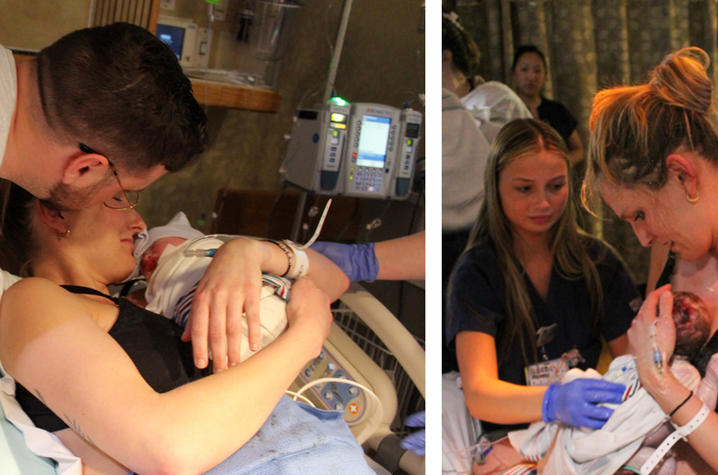
On March 8, 2026, about two weeks before her due date, Hattie made her debut. Ali was disheartened to learn that Hattie still had an intestinal blockage called meconium ileus. She would have to go to the neonatal intensive care unit, or NICU, for imaging and observation.
“The perfect success story would have been that she didn’t have to go to the NICU at all,” said Ali. “Knowing that Hattie would immediately be taken to the NICU after birth was a little bit of a gut punch.”
The care team saw it differently, as many babies born with CF require surgery shortly after birth to remove the meconium ileus. However, the blockage seen on Ali’s 20-week ultrasound appeared to have subsided enough that Hattie was eventually able to pass it on her own. Ali’s use of Trikafta appears to have been effective.
“Though we did not see the miraculous reversal of the ultrasound findings we were hoping to see, I do believe this treatment helped slow the progression of Hattie’s disease, contributed to her short NICU stay, and helped her to avoid surgery immediately after delivery,” said Hood.
After just 16 days in the NICU, Hattie went home to her big brothers and sister.
'Everything will come full circle.'
It’s universally understood that ensuring the best possible start for every baby means care begins long before birth, especially for those born with lifelong conditions. Supporting the child begins with supporting the family, and Ali is grateful for the providers who not only honored her request to start Trikafta but also brought together a team of experts who, over time, became an extension of her family.
Many experts across multiple disciplines at UK Golisano Children’s united for Team Hattie — and it was her mother who brought them all together.
“Ali is an incredible mother who fought for her child before she was even born by pushing the bounds of available medicine,” said Hood.
Kormelink agrees; she appreciates when parents and caregivers research treatment options and are open to discussion and advocate fiercely for their children.
“Ali was so brave, well-researched and inquisitive throughout the process,” she said. “She advocated tirelessly for herself and for Hattie, not afraid to ask questions or challenge the information provided so she could have the best possible understanding when weighing the pros and cons of pursuing therapy.”
Now 4 months old, Hattie will have regular follow-ups with the pediatric team in the Cystic Fibrosis Clinic until she turns 18 and transitions to the clinic’s adult care team — where a familiar face will be waiting for her.
“I feel so honored to have been a part of this journey for Ali and Hattie,” said Kormelink. “I cannot wait to see Hattie in the adult CF clinic in about 18 years, when she will officially become my patient. I think that is when everything will come full circle and I’ll be able to truly see the full impact of Trikafta for Hattie and the Grise family. Hattie and Ali will always hold a very special place in my heart, and I’ll forever consider being a part of their care one of my biggest professional achievements to date.”
Learn more about new research on cystic fibrosis and how to support CF patients in Kentucky.
UK HealthCare is the hospitals and clinics of the University of Kentucky. But it is so much more. It is more than 10,000 dedicated healthcare professionals committed to providing advanced subspecialty care for the most critically injured and ill patients from the Commonwealth and beyond. It also is the home of the state’s only National Cancer Institute (NCI)-designated Comprehensive Cancer Center, a Level IV Neonatal Intensive Care Unit that cares for the tiniest and sickest newborns and the region’s only Level 1 trauma center.
As an academic research institution, we are continuously pursuing the next generation of cures, treatments, protocols and policies. Our discoveries have the potential to change what’s medically possible within our lifetimes. Our educators and thought leaders are transforming the healthcare landscape as our six health professions colleges teach the next generation of doctors, nurses, pharmacists and other healthcare professionals, spreading the highest standards of care. UK HealthCare is the power of advanced medicine committed to creating a healthier Kentucky, now and for generations to come.