


Recognizing epilepsy in older adults: Why awareness matters
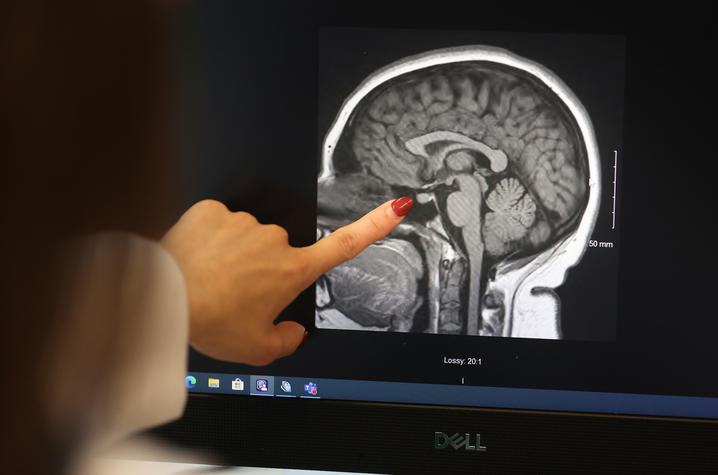
The University of Kentucky Public Relations & Strategic Communications Office provides a weekly health column. This week’s column is by Sally Mathias, M.D., neurologist and epilepsy specialist at UK HealthCare’s Kentucky Neuroscience Institute.
LEXINGTON, Ky. (Aug. 24, 2026) — When most people think of epilepsy, they picture dramatic convulsions or seizures that affect younger individuals. In reality, epilepsy is increasingly common among older adults, yet it often goes unrecognized because the signs can be much more subtle.
For years, epilepsy was not widely considered an issue affecting aging populations. We now know that after age 65, approximately one in every 1,000 people is diagnosed with new-onset epilepsy each year, and that number continues to increase with advancing age. At the same time, many older adults are already living with epilepsy, sometimes without realizing it.
One of the biggest challenges is that seizures in older adults often look very different from the seizures most people expect. Rather than full-body convulsions, many older patients experience brief episodes of confusion, memory lapses or impaired awareness. These symptoms can easily be mistaken for normal aging, medication side effects or even the early stages of dementia.
Recovery after a seizure can also look different in older adults. While younger people often return to normal relatively quickly, older adults may remain confused for hours or even days. Without someone witnessing the seizure itself, these lingering symptoms may be attributed to another medical condition rather than epilepsy.
Diagnosing epilepsy can also be more difficult because older adults are less likely to experience the warning symptoms, or “auras,” that some younger patients report before a seizure. Standard diagnostic tests, such as electroencephalograms, may also be less definitive in this age group, making clinical awareness especially important.
Several medical conditions increase the risk of developing epilepsy later in life. Stroke is the leading cause, particularly during the first year after the event. Dementia, especially early-onset Alzheimer’s disease, is also associated with a significantly higher risk of seizures. Other contributing factors include traumatic brain injury, brain tumors and vascular conditions such as high blood pressure.
Recognizing epilepsy is important because untreated seizures can have serious consequences. Older adults are already at greater risk for falls and injuries, and seizures can further increase those risks. Recurrent seizures may also contribute to worsening memory and cognitive function, and prolonged seizures can become life-threatening if not treated promptly.
The encouraging news is that epilepsy in older adults is highly treatable once it is recognized. For many patients, treatment involves a single anti-seizure medication at a relatively modest dose. Newer medications are generally well tolerated, and studies have shown that more than 80% of older adults achieve excellent seizure control with one medication alone. When medications are not enough, additional treatment options, including epilepsy surgery and other advanced therapies, may be considered for carefully selected patients.
Access to specialized epilepsy care can make a meaningful difference in diagnosis and treatment. Comprehensive epilepsy centers bring together neurologists, neuropsychologists, neuroradiologists and neurosurgeons to evaluate patients from multiple perspectives and develop individualized treatment plans. This collaborative approach can improve diagnostic accuracy, expand treatment options and help patients achieve better seizure control.
As our population continues to age, recognizing epilepsy in older adults becomes increasingly important. Seizures should never be considered a normal part of aging. If you or a loved one experiences unexplained episodes of confusion, memory loss, staring spells or periods of impaired awareness, talk with your health care provider. Early evaluation can lead to an accurate diagnosis, effective treatment and a better quality of life.
Awareness is the first step. With timely recognition and appropriate care, epilepsy in older adults is often highly manageable, allowing patients to remain safe, independent and active.
UK HealthCare is the hospitals and clinics of the University of Kentucky. But it is so much more. It is more than 10,000 dedicated healthcare professionals committed to providing advanced subspecialty care for the most critically injured and ill patients from the Commonwealth and beyond. It also is the home of the state’s only National Cancer Institute (NCI)-designated Comprehensive Cancer Center, a Level IV Neonatal Intensive Care Unit that cares for the tiniest and sickest newborns and the region’s only Level 1 trauma center.
As an academic research institution, we are continuously pursuing the next generation of cures, treatments, protocols and policies. Our discoveries have the potential to change what’s medically possible within our lifetimes. Our educators and thought leaders are transforming the healthcare landscape as our six health professions colleges teach the next generation of doctors, nurses, pharmacists and other healthcare professionals, spreading the highest standards of care. UK HealthCare is the power of advanced medicine committed to creating a healthier Kentucky, now and for generations to come.