


College of Fine Arts adds film and sonic art, music industry degree programs
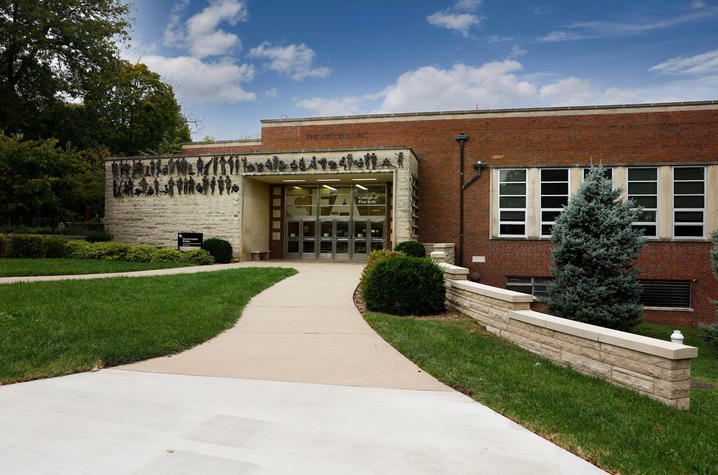
LEXINGTON, Ky. (Oct. 21, 2026) — University of Kentucky students are taking advantage of two new degree programs in the College of Fine Arts.
Mark Shanda, dean of the college, said the programs — film and sonic art, and music industry — respond to a need in Kentucky’s workforce for qualified professionals in those fields.
“The film and sonic arts degree directly aligns with the states’ ever-expanding film and immersive entertainment industry,” Shanda said. “Music Industry leverages the heritage of musical performers from across the Bluegrass, providing the business and commercial support that our home-grown artists need. We anticipate significant enrollment growth with both of these options.”
The film and sonic arts program as crafted for artistic creators seeking to advance their art through collaboration, innovation and exploration. This one-of-a-kind program pulls together the best of UK's arts community from the School of Art and Visual Studies, the School of Music, the Department of Theatre and Dance, the School of Journalism and Media in the College of Communication and Information, and International Film Studies at the College of Arts and Sciences.
It also launches at a time when Kentucky’s film industry is growing. Since 2022, filmmaking in Kentucky has created more than 27,000 jobs and contributed $795 million to the state’s gross domestic product. Matthew Brock, a senior lecturer in the School of Art and Visual Studies and an instructor for the film and sonic arts degree program, said this burgeoning industry needs professionals to support its work in and beyond Kentucky.
The genesis for film and sonic arts happened organically, he added, calling together the film and sonic resources that already exist across campus.
“This degree program blends the best academic education of film and audio production across campus into customizable pathways where hands-on learning is required,” Brock said. “This is not a traditional film degree or a traditional audio production degree. It really is about students building new cinematic and sonic pathways that make sense for their own personal, creative and professional trajectories.”
Brock said students in the degree program have access to state-of-the-art equipment and facilities, faculty and instructors with years of industry experience, and the opportunity to create cinematic art.
The degree prepares students for traditional career pathways in film and audio, but sets them up to explore new career pathways.
“As the media landscape evolves, the need for creative storytelling is greater than ever. This degree establishes a very broad base of skills that our students can apply to any industry needing creative professionals,” Brock said. “Outside the film industry, this includes everything from corporate storytelling and marketing to short form social media content and media entertainment.”
The music industry degree program appeals to nonperforming music enthusiasts as well as trained musicians, said Eli Uttal-Veroff, a lecturer in that program. It gives students a clear path to a career that lets them pursue their interest in music.
“There’s a huge need for professionals in many sectors of the music industry, which generated $3.7 billion in revenue in 2025,” Uttal-Veroff said. “This major creates a field of study where any student, regardless of experience level, can find their role in the music industry and gain essential job skills and expertise.”
The program is heavy on real life experience and preparation for a career in the music industry, Uttal-Veroff said. The skills taught range from foundational audio skills, the history of the industry and business management. Students can also seek internships for firsthand learning opportunities. It draws from the university’s existing arts administration major for coursework in leadership, teamwork, finance and financial management, marketing, technology usage and entrepreneurship.
“The brilliance of this major is it provides meat-and-potatoes skills for most roles in the music industry and the flexibility for students to become experts in whichever specialty they choose,” Uttal-Veroff said. “This means any music industry job is on the table.”
Rachel Shane, Ph.D., arts administration department chair, said the degree program creates pathways through multiple disciplines.
“The BA in Music Industry is interdisciplinary in the sense that the music industry itself requires students to think across creative, business, media, and organizational contexts,” Shane said. “Students will be able to understand music not only through performance or history, but also through the systems that support the industry, including media, entrepreneurship, event management, audience development and organizational resilience.”
Those jobs cover a wide range of opportunities in the industry, Uttal-Veroff said. Jobs with music publishing companies, record labels, artist management firms, talent agencies, recording studios, producers, sound and light teams, merchandising, distribution companies, artist public relations companies and live music festivals like Railbird succeed with trained people.
In addition to its connection with arts administration, the music industry program is intertwined with programming and courses in the School of Music. Students will embed as production experts with School of Music ensembles in preparation for their respective internships.
“You have the opportunity to be on the ground floor of a truly special program,” Uttal-Veroff said. “If you love music and want to make it your life, you’ll find the classes, mentorship, and connections in this program to make that dream a reality.”
As the state’s flagship, land-grant institution, the University of Kentucky exists to advance the Commonwealth. We do that by preparing the next generation of leaders — placing students at the heart of everything we do — and transforming the lives of Kentuckians through education, research and creative work, service and healthcare. We pride ourselves on being a catalyst for breakthroughs and a force for healing, a place where ingenuity unfolds. It's all made possible by our people — visionaries, disruptors and pioneers — who make up 200 academic programs, a $1.02 billion research and development enterprise and a world-class medical center, all on one campus.