


UK Libraries, researchers highlight resources exploring slavery, emancipation history in Kentucky
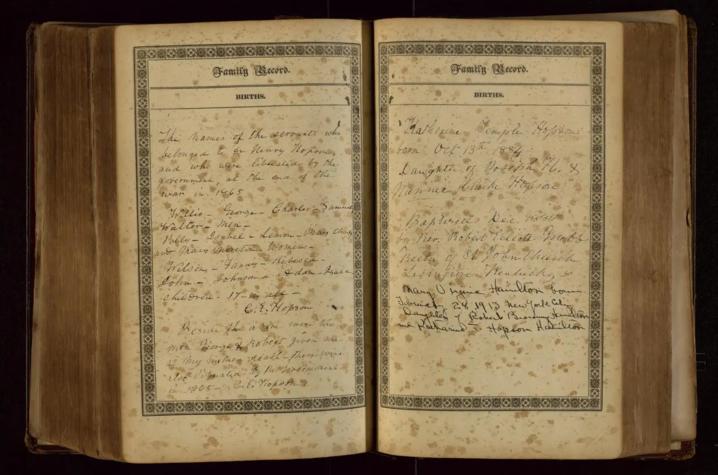

LEXINGTON, Ky. (June 18, 2026) — One of the most painful chapters of Kentucky’s story — the history of racialized slavery — will be memorialized tomorrow, Juneteenth, during the national observance of the centuries-long struggle that led to its abolition.
As America contends with its collective past, University of Kentucky Libraries has an important role to play. With extensive primary source documents and a wide range of resources, UK Libraries serves as a gateway into the study of the lived experiences and histories of enslaved people in Kentucky, their emancipation, and the Black experience across the 160 years that have followed.
UK’s collections are a record of not only the violence and brutality of the Commonwealth’s story, but even more so the courage, hope and strength that has marked the ongoing fight for equality and freedom.
Researching African-American slavery in Kentucky
Researchers who want to explore Kentucky’s history of racialized slavery should begin with Researching African American Slavery in Kentucky, a research guide curated by Reinette Jones, librarian with UK’s Special Collections Research Center.
The archive of slavery is complex, and the guide provides pointers on the types of information most readily available, and some of the challenges researchers face while using them. It also offers guidance on how to work with a variety of these sources, from county birth and census records to newspapers, government sources and the trove of public documents available through county clerks’ offices, including tax records, property deeds and the record books, certificates and registries that documented the sale of enslaved people.
The guide is particularly useful for those seeking records and documentation of the lives of enslaved people, the lives of formerly enslaved people after emancipation or freedom gained by other means, and the financial aspects of slave ownership.
Self-Emancipated and Enslaved People in Kentucky (SEEK)
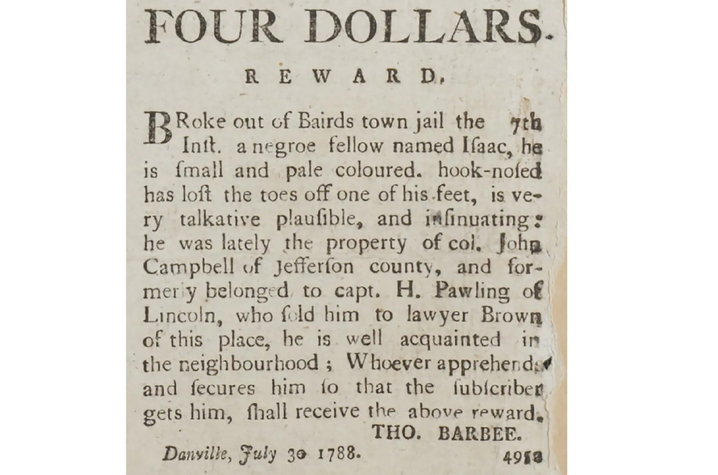
A partnership between UK Libraries, the Commonwealth Institute for Black Studies (CIBS), and several UK faculty, the Self-Emancipated & Enslaved People in Kentucky (SEEK) Project has spent several years collecting fugitive slave advertisements from historical Kentucky newspapers.
Led by Vanessa Holden, Ph.D., associate professor of history and African American and Africana studies; Reinette Jones; Kopana Terry, oral history archivist and curator of historic newspapers; and former UK librarian Jen Bartlett, the team has developed a student-focused workflow that has resulted in the clipping and collection of close to 3,000 advertisements.
The ads have come primarily from the Lexington-based Kentucky Gazette, the state’s oldest newspaper, with others from the Richmond, Kentucky, based Farmer’s Chronicle and the Louisville Daily Journal. The team plans to collect all ads from existing Gazette issues, then turn their attention to smaller titles in the hopes of creating as exhaustive a record as possible of all fugitive slave ads published in Kentucky.
“These ads allow people to learn about slavery through Black resistance, which is a different entry point into the subject than usual,” Holden said. “The ads are typically only five to eight lines long, so you don’t get the beginning or the end of the story, but you do get the middle. The archive of slavery so often reifies the violence it describes, but this project allows us to foreground the humanity and the agency of self-emancipated people.”
The SEEK Project plans to launch a website in Spring of 2027 with a user-friendly interface that allows researchers to explore the individual stories that made up the large-scale movement of fugitive slaves seeking freedom in the late 18th and 19th centuries. Each advertisement will link back to the original newspaper issue, allowing an expanded view of the ad’s source and context.
The project plans to share its data with Freedom on the Move, a national project based at Cornell University.
“There are hundreds and hundreds of thousands of these ads,” Holden said. “As we continue to collect more, we’ll be able to make incredible connections at a national scale and really see the volume of people who were engaged in fleeing slavery.”
The research team has honed their process since the group first formed in Fall 2022. The work of finding and clipping ads has primarily been done by undergraduate students.
“Exploring the archive is a very different experience from hearing a lecture in the classroom, and it’s been incredibly meaningful to students,” Holden said. “One student approached me and said, ‘If this is Kentucky’s history, that means it’s mine too.’ We’ve been able to have thoughtful, careful conversations about what this archive reveals, and we’re looking forward to the ways these conversations will expand once the collection becomes public.”
“Faculty very frequently utilize library services in their research, but it has been a pleasure to work with librarians as true partners and collaborators,” Holden added. “With their expertise in data management, they’re able to build systems that allow others to also find and explore all of these materials that we’ve worked to uncover. I can’t imagine conducting this project with any other research partners.”
The SEEK team is also exploring meaningful ways to connect their findings with the Digital Access Project (DAP). A partnership between CIBS, the Lexington Black Prosperity Initiative and the Fayette County Clerk’s Office, DAP allows researchers to digitally access nearly a quarter million records from the late 18th century to 1865 that are held by the county clerk’s office, including deeds, mortgage records and a variety of probate records that contain information about enslaved people.
Notable Kentucky African Americans Database
First launched in 2003, the Notable Kentucky African Americans (NKAA) Database contains more than 3,300 entries about people, places, events and communities pertaining to Black Americans in and from Kentucky, making it the preeminent resource for information on the Black experience in the state. Entries span centuries, from enslavement and emancipation to Jim Crow and civil rights and into the present day.
Entries are organized by more than 400 subject headings and more than 1,100 places. They are built from more than 4,600 sources which are linked in each entry and also browsable by users.
The NKAA database was co-created by Jones and former UK Librarian Rob Aken and is used by more than 200,000 users each year.
More resources
The Researching African American Slavery in Kentucky and Researching African American Slavery in U.S. History guides contain an exhaustive list of the many resources available to UK Libraries users and the public for exploring the Black experience, both prior to and following emancipation, in Kentucky and across the country.
Two other Kentucky-based resources may provide users with a useful starting point in their research:
- The Documenting Racial Violence in Kentucky Database is a growing digital archive of the 353 people lynched in the state between 1866 and 1934, led by UK Associate Professor of History Nikki Brown.
- Researching African Americans at the Kentucky Archives provides guidelines on conducting African American genealogy using state and local records available to the public through the Kentucky Department for Libraries and Archives in Frankfort.
About UK Libraries
As the premier research library in the Commonwealth, UK Libraries empowers lifelong learners to discover, create and connect by providing ever-expanding access to quality information and collaborating with academic and creative communities worldwide to advance knowledge, enhance scholarship, and preserve the history and culture of the Commonwealth. More information about UK Libraries can be found at libraries.uky.edu.
As the state’s flagship, land-grant institution, the University of Kentucky exists to advance the Commonwealth. We do that by preparing the next generation of leaders — placing students at the heart of everything we do — and transforming the lives of Kentuckians through education, research and creative work, service and healthcare. We pride ourselves on being a catalyst for breakthroughs and a force for healing, a place where ingenuity unfolds. It's all made possible by our people — visionaries, disruptors and pioneers — who make up 200 academic programs, a $1.02 billion research and development enterprise and a world-class medical center, all on one campus.