


UK Pre-Vet Experience Day hosts high school students interested in veterinary medicine
LEXINGTON, Ky. (March 5, 2026) — This year, Valentine’s Day at the University of Kentucky was for veterinarians, or at least, future veterinarians.
UK’s Pre-Veterinary Experience Day returned for a third year Feb. 14 with an innovative and interactive event designed to guide, inform and inspire the next generation of veterinarians and help them explore the multifaceted world of veterinary medicine. Although Pre-Veterinary Experience Day has become an annual event, this year was the first time it catered to high school students instead of college students.
The day was organized by the UK Pre-Veterinary Mentoring Program within the Martin-Gatton College of Agriculture, Food and Environment (CAFE), in collaboration with the Kentucky Horse Council. The event also supported high school students through a three-year, $250,000 grant from the U.S. Department of Agriculture’s National Institute of Food and Agriculture.
The daylong event drew 80 students and 85 parent participants. Of those students, 75 were from Kentucky, with the remaining attendees coming from New York, Ohio and West Virginia. The high school students ranged from first-year students to seniors.
“We were thrilled for the opportunity to expand UK’s Pre-Veterinary Experience Day, sharing enthusiasm, resources, career exploration and networking opportunities within this field,” said Amber McNamara, D.V.M., faculty director of the Pre-Veterinary Mentoring Program and one of the event co-organizers. “Recognizing that veterinary success relies on a strong support system, the event intentionally engaged both students and parents, providing tools and information to help families make the best-informed decisions.”
Pre-Veterinary Experience Day: At a glance
The day was structured into two tracks, one specific to students and another to parents. Sessions were led by a mix of faculty and staff, students currently in veterinary school and undergraduate students on a pre-veterinary track at UK. There were shared informational sessions for students and parents as well as interactive breakout sessions specifically for students in the afternoon.
For Malena Hughes, a UK pre-vet student, Martin-Gatton CAFE Student Ambassador, Pre-Vet Club and Block and Bridle president and afternoon session leader, the event provided a full-circle moment.
“I attended the event in one of its very first iterations and was able to network with professionals, gain valuable application tips and tour local veterinary facilities in the area. Having previously been a participant, I was so excited to help create this opportunity for an even younger generation of students,” Hughes said. “I come from a rural background, so I understand how access to veterinarians can be limited, not only for clients, but also for young aspiring students. I loved that Pre-Veterinary Experience Day allowed students from backgrounds like mine to be exposed to aspects of veterinary medicine they may have never seen as well as resources to help them on their journey.”
Hughes also shared what it meant to help other students.
“I was able to lead one of the student activity rotations and chose to focus my session on parasitology by having students look at various parasites through a microscope and engage in discussion questions to teach them about each species,” Hughes said. “One of my favorite experiences throughout my time at UK has been working in an equine parasitology lab on an independent research project, so being able to teach students about something that means so much to me was incredibly fulfilling.”
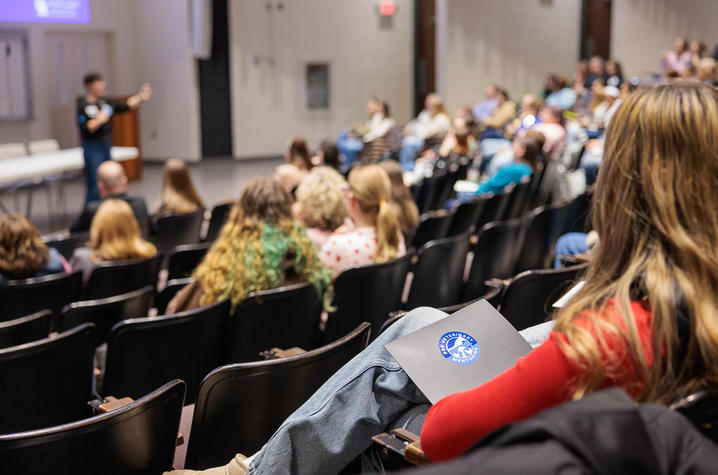
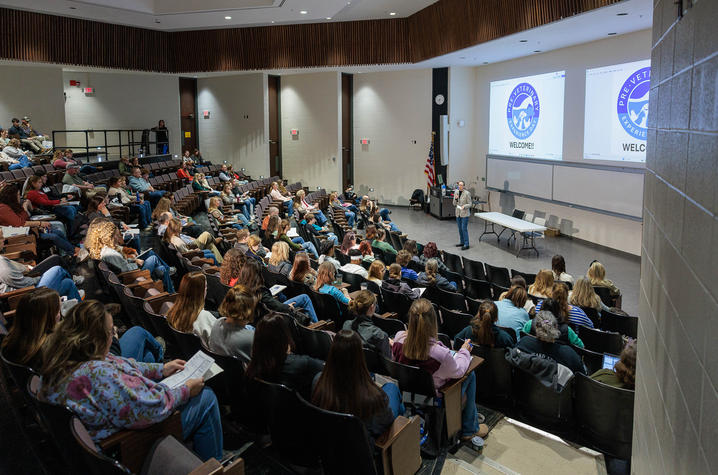
Students and parents engaged in morning sessions together, hearing presentations including what veterinary medicine is and isn’t; a veterinary career overview; pathways to veterinary medicine with considerations for students in high school; and hearing a panel discussion from current veterinary students and recent graduates about veterinary journeys and insights.
“Career possibilities within veterinary medicine are diverse, and rewarding pathways can look different for each student,” McNamara said. “At the same time, the profession has challenges that many students and parents may not anticipate, including student debt, workforce shortages and mental health concerns. Balancing enthusiasm with an awareness of these realities, along with access to meaningful resources and mentorship, can help students identify the path that aligns best with their strengths and goals.”
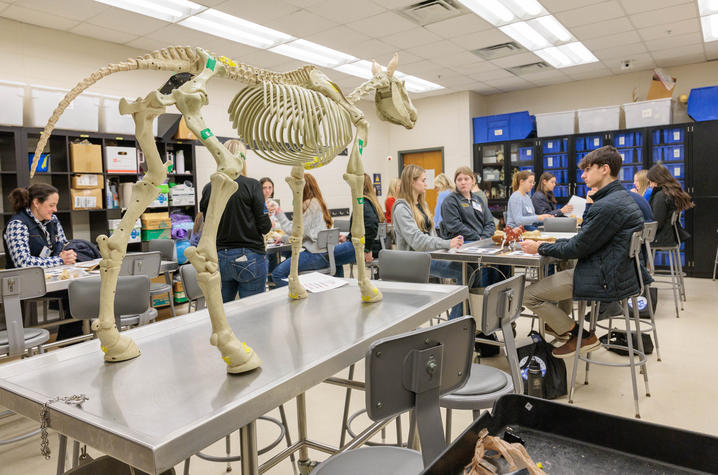
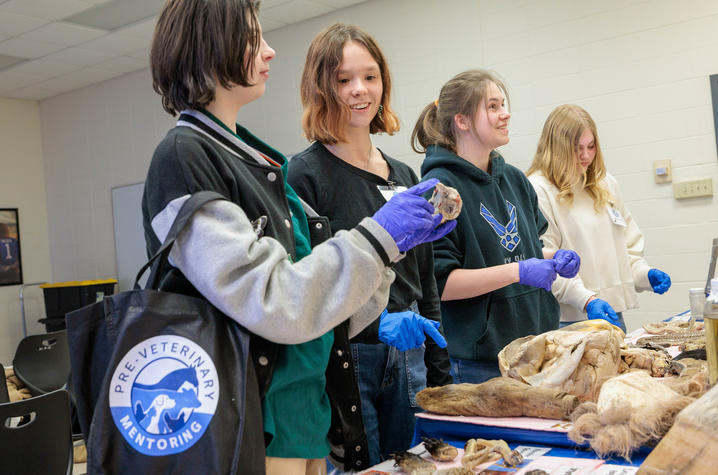
Afternoon breakout sessions for students included an equine internal medicine review and introduction to equine dentistry; comparative skeletal anatomy of companion animal forelimbs; microscopic review of veterinary parasites of clinical importance; and animal tissues, specimens and video of necropsies conducted at the UK Veterinary Diagnostic Laboratory.
For parents, afternoon sessions included presentations about veterinary medicine challenges and resources, healthy support for an aspiring pre-vet student and a panel from UK pre-vet students about what they wish their family knew about their journey. In the discussion, moderated by McNamara, panelists answered questions about their insight on the pre-vet journey. They also answered questions from the parents.
“The parents were engaged and asked us some great questions that covered a variety of topics from life as a student to time management skills to the best way to get veterinary experience in college,” said Landon Porter, a UK junior pre-vet student and panelist.
Porter also imparted words of wisdom to the students.
“I shared my experiences of growing up on a farm, working in a rural mixed practice veterinary clinic and as a student worker at UK’s sheep unit,” Porter said. “I tried to emphasize hands-on experience, the importance of time management for studying at school and, most importantly, highlighted that sense of community makes a big difference academically and professionally.
“It was great to have more of these personal conversations to share why I think UK has done an excellent job preparing me for veterinary school.”
Katie Merrel, a pre-veterinary academic coordinator at Martin-Gatton CAFE and one of the event co-organizers, emphasized the importance of students and parents learning together.
“Pre-Veterinary Experience Day was designed to give students meaningful, hands-on exposure to veterinary medicine while also equipping parents with a clearer understanding of the academic pathway and commitment required,” Merrell said. “It was incredibly rewarding to see families learning alongside their students and supporting their goals from the very beginning.”
Save the date
The focus of Pre-Veterinary Experience Day alternates each year between a program designed for college students, and one directed at high school students.
Next year’s event, Feb.13, 2027, is for college students.
Sponsorship and collaboration opportunities are available.
“Many thanks to all of our presenters, session leaders, panelists and volunteers who made this day rewarding and meaningful for veterinary hopefuls,” McNamara added.
Visit Pre-Veterinary Experience Day at Martin-Gatton CAFE to learn more.
This material is based upon work that is supported by the National Institute of Food and Agriculture, U.S. Department of Agriculture, under award number 2025-70024-45089. Any opinions, findings, conclusions or recommendations expressed in this publication are those of the author(s) and do not necessarily reflect the view of the Department of Agriculture.
As the state’s flagship, land-grant institution, the University of Kentucky exists to advance the Commonwealth. We do that by preparing the next generation of leaders — placing students at the heart of everything we do — and transforming the lives of Kentuckians through education, research and creative work, service and healthcare. We pride ourselves on being a catalyst for breakthroughs and a force for healing, a place where ingenuity unfolds. It's all made possible by our people — visionaries, disruptors and pioneers — who make up 200 academic programs, a $1.02 billion research and development enterprise and a world-class medical center, all on one campus.