


UK students transform plastic bags into support for Lexington’s unhoused


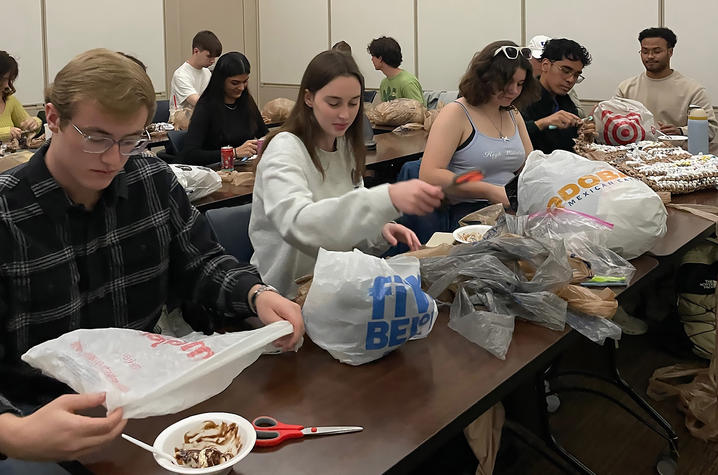
LEXINGTON, Ky. (April 13, 2026) — BBN Tackles Plastic, an initiative aimed at reducing campus plastic waste through the collection of plastic bags, is expanding into select campus residence halls. The project, created by Shayna Bassi, a UK Recycling intern and communication science and disorders senior in the College of Health Sciences, has been integral at removing plastic bags from campus landfill waste.
The project began at the start of the spring semester as a pilot p[rogram, placing plastic bag drop off bins outside The Thrifty Cat and in the lobbies of Lewis Hall and University Flats. The now expanded program includes collection bins in the lobbies of Holmes, Jewell, Haggin, Donovan and Lyman T. Johnson residence halls. Bassi checks the bins every other week and has seen great success from the initial effort.
“Across the pilot locations, we have collected nearly 850 bags in a month and a half,” Bassi said. “These are bags that we have been able to keep from landfills and from contaminating campus recycling. That was just over a short amount of time with our pilot locations — imagine what we can do now that we have expanded.”
The bags are donated to Sustainability Future Leaders, an on-campus student organization that Bassi also leads. Members transform the bags into sleeping mats for distribution to Lexington residents without stable housing through a partnership with The Hope Center.
“Sustainability Future Leaders have been making sleeping mats from plastic bags and donating them at the end of the school year for the past three years,” Bassi said. “We have completed 20 mats in the past two years and have completed eight so far this year with many more in progress. Through the BBN Tackles Plastic initiative, we are able to find a second life for a material usually thrown away and also support an under-sourced population in the greater Lexington community.”
Aside from supporting The Hope Center, the project has fortified connections across the campus community.
“This project has strengthened UK Recycling’s relationship with Residence Life, an important partner on this program which has been key to its success,” said Ryan Lark, UK’s zero-waste specialist.
The success and expansion of the pilot program aids UK in achieving three of its five guiding principles of sustainability: making the pursuit of sustainability an integral part of the UK student experience, reinforcing the university’s commitment to our people and becoming a zero-waste campus.
“Plastic bags represent a common contaminant in our recycling material,” Lark said. “These bags cannot be recycled in our mixed recycling. This project is an opportunity to reuse bags and keep them from contaminating our recycling bins.”
Bassi and Lark are excited for the opportunity to further integrate the project within campus residence halls. The program is expected to expand into all residence halls this fall.
“On-campus residents produce a large amount of waste in proportion to other students since they live at UK full-time,” Lark said. “By implementing this program, we are raising awareness about how to be more sustainably-minded while also keeping a nuisance waste product out of the landfill.”
As the state’s flagship, land-grant institution, the University of Kentucky exists to advance the Commonwealth. We do that by preparing the next generation of leaders — placing students at the heart of everything we do — and transforming the lives of Kentuckians through education, research and creative work, service and healthcare. We pride ourselves on being a catalyst for breakthroughs and a force for healing, a place where ingenuity unfolds. It's all made possible by our people — visionaries, disruptors and pioneers — who make up 200 academic programs, a $1.02 billion research and development enterprise and a world-class medical center, all on one campus.