


Full circle: UK transplant patient is ready for new beginning
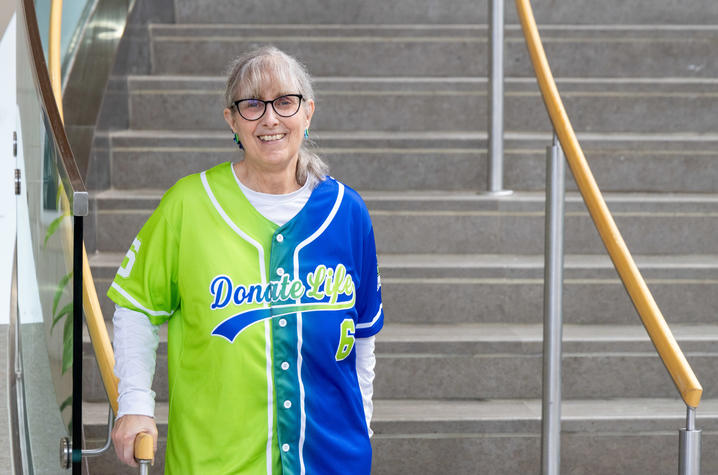
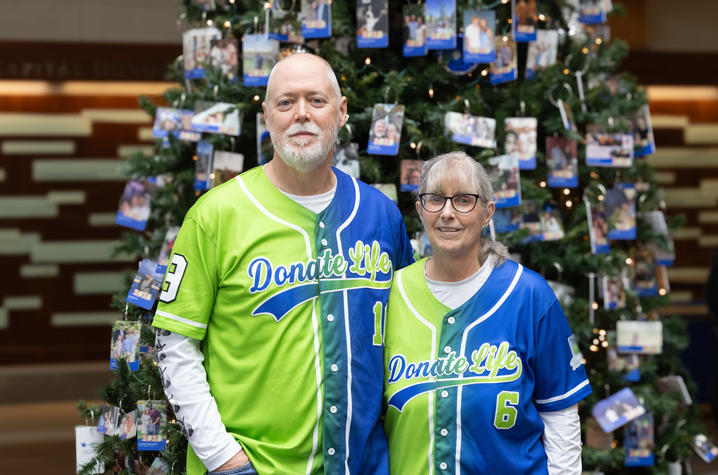
LEXINGTON, Ky. (Dec. 22, 2025) – When Debbie Coleman of Louisville was told she had stage 5 kidney failure, it was a bit of a surprise.
In September 2023, she was admitted to the hospital with a bleeding ulcer. During the routine lab work that comes with a hospital admission, her kidney function was tested; the results were alarming – most of all to Debbie, who, aside from some fatigue, had no idea anything was wrong.
“It was just a smack in the face,” she said. “I had no symptoms at all.”
Years of working a stressful job had taken its toll. Persistent, stress-induced hypertension destroyed both of her kidneys. A transplant was her only way forward.
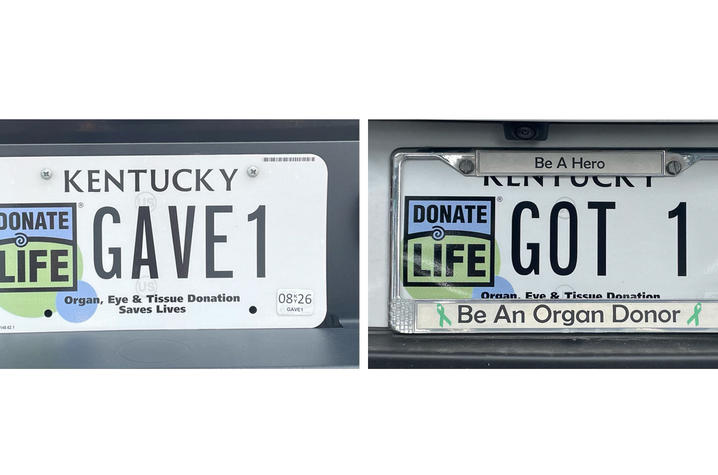
The world of organ transplant is a familiar one to Debbie. Her mother received a liver transplant in 1990, and through that, she and her husband Tom became advocates for organ donation and got involved with Second Chance at Life, an organization that supports organ donors, recipients and their families. But she never pictured herself in that situation – the sudden diagnosis, the severity of her condition and the urgency of her situation was almost too much to reconcile. Rather than turn to the support of an organization she knew so well, she found herself shying away from it.
“It had to sink in,” Debbie said. “I didn’t want to go back to a meeting. Even though we’d seen how well recipients had come out of it. I told all these doctors, no more until after Christmas. Let me get through Christmas, then we’ll talk about it.”
The kindness of strangers
Meanwhile, Tom felt the call to be a kidney donor for years, but something inside him told him to hold off. It’s like he knew someone close to him would need it someday.
“I think there’s a bigger plan for me,” he said. “The fact that I didn’t donate years ago, I think there was a reason for it. That somebody knew something was going to come up.”
Tom, along with one of Debbie’s sisters, underwent the extensive testing to see if they were a match for Debbie. They weren’t.
“It was devastating,” she said. “Between my sister and Tom, they were both devastated that they couldn’t donate to me.”
Prior to being listed for an organ transplant, patients undergo extensive screening to find the best possible match. One test measures the human leukocyte antigen (HLA), the protein on the surface of the cell that helps the immune system identify what’s part of its body and what to consider a “foreign invader” that should be attacked and destroyed. Debbie’s tests revealed elevated HLA antibodies, meaning that her immune system was particularly sensitive to perceived threats. If the donor kidney wasn’t an exact match, her body would reject it. This made finding a suitable donor even more difficult.
“My other sisters stepped up, but they couldn’t donate,” Debbie said. “I just thought, ‘I don’t know what the heck I’m going to do.’ Thank goodness for the match program.”
The National Kidney Registry (NKR) is an organization that facilitates kidney transplants through a network of living donors. A donor gives to a stranger in need on the transplant list; in return, their loved one in need receives a kidney from another stranger on the registry. Tom wasn’t a match for Debbie. But he could be a match for someone else.
“It’s another avenue to find a donor,” said Debbie. Instead of waiting, potentially for years, on the wait list, the NKR utilizes a voucher system. Tom gave his kidney to someone on October 9, 2024; in return, Debbie was listed in the network’s registry – her blood type, antibodies and other factors carefully matched with those of a registered donor. Nine months later, Debbie got the call.
And not a moment too soon.
Her health was fading fast; her kidney function continued to decline. She had avoided dialysis so far, but it was becoming a more frequent conversation with her doctors.
“I was still working full-time,” she said. “I couldn’t do much more than that. I would go to work, come home, eat dinner, then I was on the couch. I felt like all I did was work and get on the couch.”
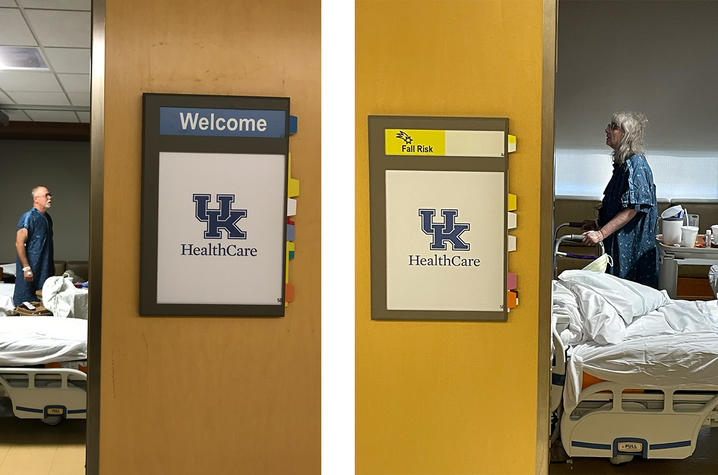
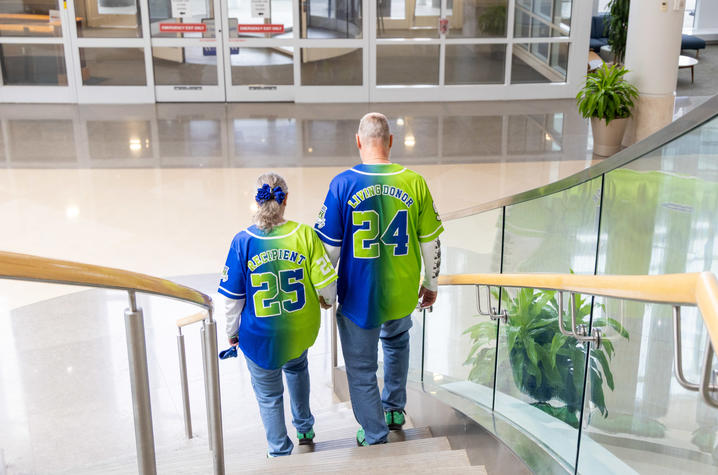
On June 25, 2025, with surgeon Alejandro Cracco, M.D., and his team, Debbie cashed in her voucher and received her new kidney. Thanks to an anonymous stranger, she had a new beginning. And thanks to Tom, another stranger got one as well.
“Watching the Coleman story come full circle has been nothing short of incredible,” said Rachael Benezet, nurse coordinator for living donation at the UK Transplant Center. “She and her husband have always been true champions for living donation — he gave a part of himself to save her, and now, through NKR, she has received the gift of a kidney in return. After all the long days of waiting and uncertainty, seeing that moment finally arrive was a true blessing. It's a powerful reminder of hope, resilience, and the impact of living donation.”
Let the games begin
Debbie is back to work part-time with an eye on retirement. She’s not sure what comes next – and she’s loving it.
“I’ve had a lot of time to think, and I don’t want to work anymore,” she said. “I’m going to be 67, and I’ve worked all my life. My boss thought one day I would come into work and die, and that’s what I thought at one time, too. I’m trying to figure out what I want to do.”
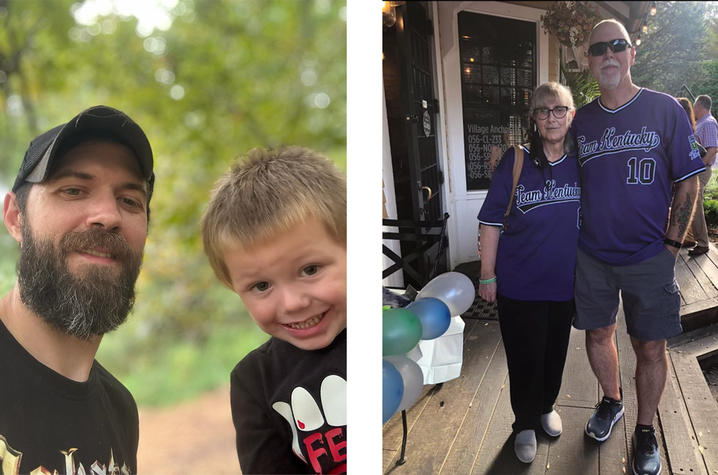
Since 2002, the Colemans have been active supporters of the Transplant Games, a national, multi-sport event that celebrates organ donors, recipients and their families. In June 2026, around the anniversary of Debbie’s transplant, they will get to compete together at the games in Denver. From darts to bowling to ballroom dancing, there’s an opportunity for everyone to participate. And since donors and recipients don’t compete against each other, Tom and Debbie will cheer each other on, just as they have for their entire marriage.
“My impression of the Colemans is that they are true fighters,” said Benezet, who has gotten to know the couple well over the past few years. “They will do whatever it takes to accomplish what needs to be done to reach the best outcome. Even if it hadn't been his wife who needed a kidney, Tom would do it all over again in a heartbeat. They are both incredible ambassadors for organ donation, and the world truly needs more people like them. Through every obstacle we've faced together, they've chosen positivity, strength, and grace. These are the true champions of organ donation. I'm proud to have them shining their light and inspiring others to consider giving the gift of life.”
UK HealthCare is the hospitals and clinics of the University of Kentucky. But it is so much more. It is more than 10,000 dedicated healthcare professionals committed to providing advanced subspecialty care for the most critically injured and ill patients from the Commonwealth and beyond. It also is the home of the state’s only National Cancer Institute (NCI)-designated Comprehensive Cancer Center, a Level IV Neonatal Intensive Care Unit that cares for the tiniest and sickest newborns and the region’s only Level 1 trauma center.
As an academic research institution, we are continuously pursuing the next generation of cures, treatments, protocols and policies. Our discoveries have the potential to change what’s medically possible within our lifetimes. Our educators and thought leaders are transforming the healthcare landscape as our six health professions colleges teach the next generation of doctors, nurses, pharmacists and other healthcare professionals, spreading the highest standards of care. UK HealthCare is the power of advanced medicine committed to creating a healthier Kentucky, now and for generations to come.