


Q&A: How UK Innovate’s TRUST Hub translates research into community impact
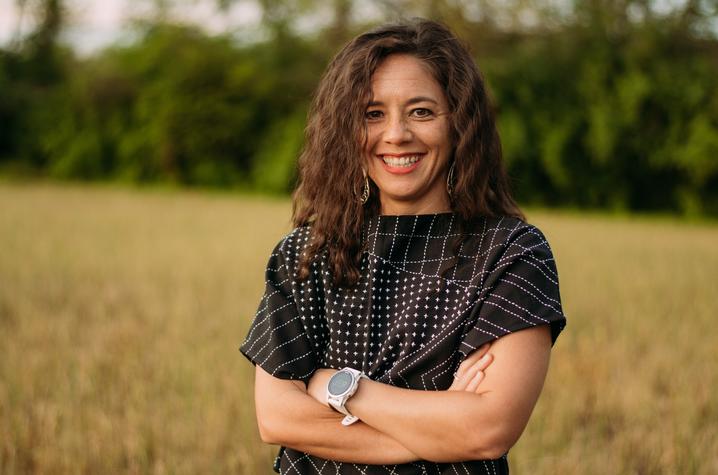
LEXINGTON, Ky. (Feb. 17, 2026) — The University of Kentucky’s TRUST Hub — Translating Research through Universal Solutions Together — is working to address some of Kentucky’s most pressing issues. Serenity Wright, Ed.D., senior executive director for innovation, community health and societal impact at UK Innovate, answers some questions about the TRUST Hub, how it works and why this approach matters for Kentucky.
UKNOW: What is TRUST Hub? How would you describe its mission?
Wright: The work of TRUST Hub focuses on translational research for impact and community resiliency. We help move ideas out of theory and put them in action benefiting communities.
Lived experience is critical for creation, adoption and scale. When we design solutions without communities, they don’t last. TRUST Hub exists to help build solutions with communities through partnerships, trust and a framework that supports long-term impact. We accomplish this by partnering with faculty, staff and students across campus to ensure their work is shaped by and responsive to community needs.
UKNOW: TRUST Hub blends research, entrepreneurship, social impact and community health. How do these areas work together in practice to advance TRUST Hub’s mission?
Wright: TRUST Hub isn’t about four separate programs. It is a shared framework for solving problems. Across TRUST Hub, human-centered design guides how we work and ensure solutions are shaped by real community needs.
In practice, Launch Blue and the Sustainable Futures Design Lab are more problem-solving focused. That’s where we ask, “What is the problem? How do we define it? How do we test to make sure this is really what people need?”
Social Innovation and Community Health Innovation are more solution oriented. That’s where we partner with communities to identify solutions and scale them to meet real needs.
The huge difference across all of this is testing assumptions and direction to ensure we’re moving towards real impact. Rather than forcing it into a rigid model, TRUST Hub adapts to what the community needs. That shared approach allows us to move beyond individual projects and toward sustained, community-centered impact.
UKNOW: How does this framework translate into real-world impact? Can you share an example reflecting the kind of community-centered work TRUST Hub aims to support?
Wright: Across everything we do, we always come back to trust. When partners ask about progress, we talk about the time invested, the outreach, the follow-up — because relationships are a key part of the work. We’re creating a hub connecting innovators with broader communities. We facilitate conversations that go into making meaningful connections.
A good example is the Sustainable Futures Design Lab. What started as a single partnership expanded into a collaboration platform where engagement events and co-creation efforts helped translate ideas into competitive proposals. That outcome wasn’t due to a single project. However, it reflects the network of relationships TRUST Hub made possible.
Likewise, Launch Blue’s partnership with Valvoline was a catalytic moment demonstrating how entrepreneurial training and collaboration can drive meaningful impact. We’re now actively pursuing additional partnerships built on that model across the Commonwealth.
What makes these collaborations across TRUST Hub meaningful is not just the outcome, it’s the process. Having clear communication, follow-through and a shared commitment to make impact from innovation truly matter. Very often, people come to us saying, “I don’t know if you can help me with this” and our response is, “We’ll figure out how to.”
UKNOW: What motivates you and your team to do this work?
Wright: The motivation is to help make an impact that matters and lead to a positive difference in communities.
One moment capturing this is our decision to bring on dedicated leadership for Community Health Innovation with the hiring of Beth Fomby, community health innovation manager. It was a pivotal moment when we decided community health wasn’t an add-on but a focused priority. It helped place emphasis on and institutional commitment to building the infrastructure and trusted networks needed to support community-adapted solutions to health.
We combine that sense of purpose with the ability to execute. We’re goal oriented, mission-focused and deeply committed to relationships that make impact possible.
UKNOW: How can students, faculty or community members get involved with TRUST Hub? Are there opportunities people should watch for?
Wright: With the changing landscape of health, it comes back to basic needs and social drivers affecting outcomes. As a Commonwealth, we must do better at preventive care.
For Community Health Innovation, we actively look for people with ideas and community-specific solutions. Whether you’re part of a health care system, a community-based organization or a community member, our role is to help ensure the infrastructure and trusted networks are there to deploy, adopt and scale those solutions for improved health outcomes.
For Sustainable Futures, fall through spring can be a challenging time for communities, especially during storm season. We host on-campus events focused on environmental resilience where people can register, get engaged and connect with partners.
But there are many ways to engage across TRUST Hub’s focus areas. If you have an idea, a question or even uncertainty about where to begin — reach out. TRUST Hub exists to help people move forward. The earlier those conversations start, the stronger and more impactful the outcomes.
As the state’s flagship, land-grant institution, the University of Kentucky exists to advance the Commonwealth. We do that by preparing the next generation of leaders — placing students at the heart of everything we do — and transforming the lives of Kentuckians through education, research and creative work, service and healthcare. We pride ourselves on being a catalyst for breakthroughs and a force for healing, a place where ingenuity unfolds. It's all made possible by our people — visionaries, disruptors and pioneers — who make up 200 academic programs, a $1.02 billion research and development enterprise and a world-class medical center, all on one campus.