


Making medicine feel possible: MedPals program supports future physicians
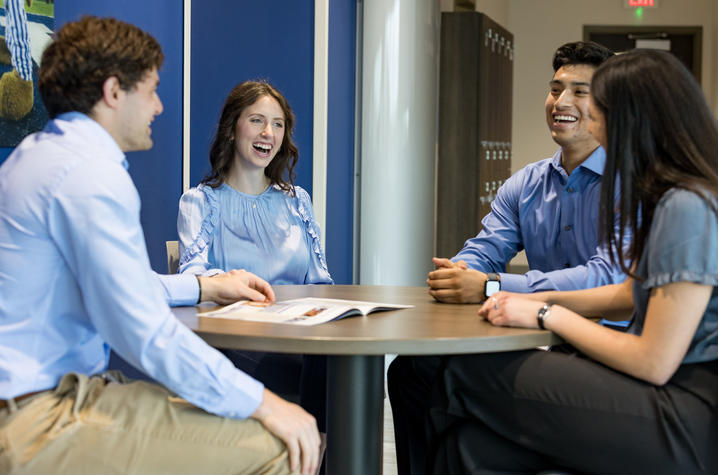
BOWLING GREEN, Ky. (Feb. 26, 2026) — At the University of Kentucky College of Medicine-Bowling Green Campus, leadership begins early. Students are not only preparing for their future roles as physicians, but also actively shaping the learning environment for those who will follow. MedPals, a student-led mentorship program connecting Western Kentucky University pre-medical students with UK medical students, is one example of that leadership in action.
Now in its third year, MedPals has become a cornerstone of the Bowling Green Campus. Created by students and sustained by campus partners, the program provides structured workshops, individualized guidance, and clear pathways for pre-medical students navigating the transition into medical training.
The idea for MedPals originated with Jacqueline Leon, now a third-year medical student, who drew on her own undergraduate experiences with mentorship. When she arrived at medical school, she saw an opportunity to create a similar support system between WKU and the UK College of Medicine-Bowling Green Campus.
Leon soon found that many of her classmates shared that vision. She partnered with fellow third-year medical student and WKU alum Tyler Ohler to begin building a formal connection between pre-medical students and medical students — one that would be student-driven and sustainable.
Working with faculty, other student organizations, and college leadership, the group developed a program that pairs mentors and mentees based on shared interests and offers monthly workshops focused on key milestones such as the MCAT, applications, interviews and specialty exploration. From the outset, the goal was to create a supportive, approachable environment where students could ask questions and gain perspective from those just a few years ahead of them.
A space where medicine feels attainable
Each month, MedPals brings students together for workshops and informal conversations that complement one-on-one mentorship. While the sessions address the mechanics of preparing for medical school, mentors say the most meaningful moments often happen outside the formal agenda.
“There’s this perception that medical students have it all figured out — and we don’t,” said Daniel Moore, a second-year medical student and MedPals co-lead. “Being able to say, ‘Hey, I struggled with this too,’ goes a long way.”
Those conversations help normalize uncertainty and reduce anxiety for students who may be navigating the process without family or professional connections in medicine. For many mentees, hearing candid reflections from someone who has been through the process is transformative.
After one session, a WKU pre-medical student shared with mentors, “This made med school feel possible for the first time.”
For UK students, MedPals also offers a meaningful leadership opportunity. Mentors practice communication, reflection and service as they support students through one of the most uncertain stages of their academic journeys.
“Every time I leave a workshop, I feel re-energized,” said Christopher Fleisher, a second-year medical student and MedPals co-lead. “It’s a reminder of why we’re doing this.”
The program also encourages mentors to reflect on their own paths to medicine and the guidance that helped them along the way.
“You have to think back,” Moore added. “Why did I choose medicine? How did I make those decisions? It reconnects you to your purpose.”
Deanna Morris, Ph.D., assistant dean for student affairs at the campus, said MedPals reflects the campus’ commitment to student leadership, well-being and community partnership.
“This program gives students meaningful leadership opportunities while strengthening our relationship with WKU, an important educational partner,” Morris said. “It allows our students to give back in a way that’s authentic and fulfilling, while also supporting future applicants who are navigating a very complex process.”
Turning service into scholarship
As the program has grown, MedPals leaders have also turned their work into scholarship. Student leaders have presented the program at national meetings and published a manuscript in the Journal for Regional Medical Campuses, sharing their model with other institutions and encouraging the development of similar initiatives.
The program’s impact is already visible. MedPals has supported dozens of WKU students through one-on-one mentorship, campus visits and advising sessions, with several former mentees now matriculating into the UK College of Medicine–Bowling Green Campus and participating in early assurance pathways.
Looking ahead, student leaders hope MedPals will continue to grow, expanding to additional partner institutions and sustaining itself as mentees become mentors. The long-term vision is to strengthen Kentucky’s physician pipeline by offering early, consistent mentorship, particularly for students who may not have personal connections to the medical field.
At its core, MedPals reflects a simple but powerful idea: no one should have to navigate the journey to medicine alone. Through leadership, mentorship and collaboration, UK medical students are helping make that journey more accessible for those who will follow.
As the state’s flagship, land-grant institution, the University of Kentucky exists to advance the Commonwealth. We do that by preparing the next generation of leaders — placing students at the heart of everything we do — and transforming the lives of Kentuckians through education, research and creative work, service and healthcare. We pride ourselves on being a catalyst for breakthroughs and a force for healing, a place where ingenuity unfolds. It's all made possible by our people — visionaries, disruptors and pioneers — who make up 200 academic programs, a $1.02 billion research and development enterprise and a world-class medical center, all on one campus.