


UK Land-grant Engagement project unites communities through storytelling techniques
LEXINGTON, Ky. (March 4, 2026) — The University of Kentucky Martin-Gatton College of Agriculture, Food and Environment (CAFE) and the UK College of Public Health (CPH) are using storytelling practice methods to help strengthen local communities.
The project, “Building a Storytelling for Engagement Community of Practice” (SECoP), aims to bring together the UK Cooperative Extension Service, scholars and researchers, health departments, community developers, social services and arts-based organizations to strengthen engagement.
Led by Nicole Breazeale, Ph.D., associate UK Extension professor of community development at Martin-Gatton CAFE, and Margaret McGladrey, Ph.D., assistant professor in CPH’s Department of Health Management and Policy, SECoP is all about bringing people together — moving from research to engagement.
“Community development and health and wellness practitioners often work in disciplinary silos,” Breazeale said. “The SECoP project helps bridge these silos. We want scholars and practitioners from across different sectors to grow their skill and social capital — using story-based methods to advance community engagement.”
In 2024, the UK Office of Land-grant Engagement announced funding for multiple projects, focusing on community engagement. The goal was to expand collaborative efforts between UK and partners across the Commonwealth while addressing important public needs, showcasing the intersection of agriculture, extension efforts and public health. SECoP was one of the nine projects selected.
“Storytelling is a great way to integrate community members’ voices into existing community programming,” McGladrey said. “We are creating opportunities for more personal storytelling, with deeper listening, to connect with what’s really happening in real-life.”
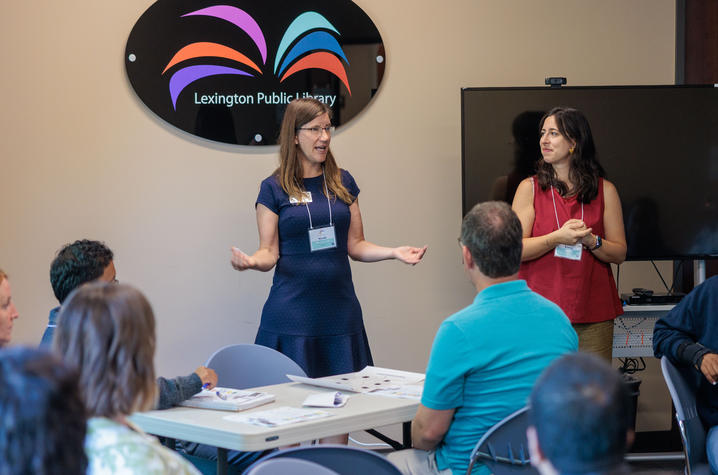
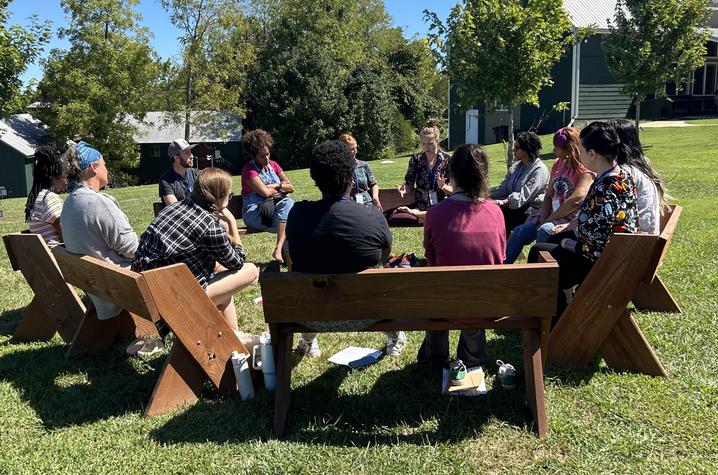
SECoP initially launched with a two-day retreat. Attended by students and professionals in public health, extension, local food systems, community and leadership development across Kentucky, participants were able to engage in three storytelling practices.
The hope was that, at the retreat’s conclusion, participants would feel inspired to implement these and related community-based storytelling practices into their public work.
Storytelling through narrative medicine
Bradley Firchow is a fourth-year UK medical student. Located in Morehead, Kentucky, Firchow is part of the Rural Physician Leadership Program and the Caring for Appalachians Through Service Clinic, which focuses on providing rural medicine and patient care in Appalachia.
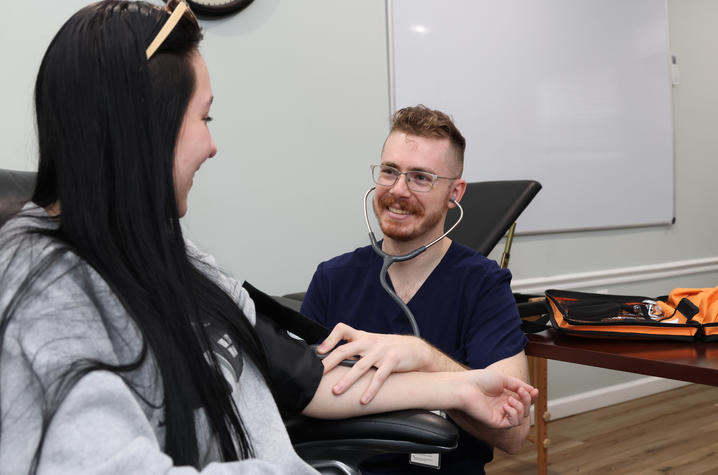
Firchow has been learning to practice narrative medicine, an approach to health care that trains clinicians to listen closely to patients’ stories about illness, identity and meaning so care is guided not only by tests and diagnoses but by lived experience.
“A patient may talk about breathlessness but keeps circling back to how they can no longer tend the hillside garden or keep up with neighbors at the church supper, which leaves their days feeling long and closed-in,” Firchow said. “Hearing this, a clinician might shift the visit from lab values and prescriptions to figuring out how care might help the patient stay connected to the land and people that have always given his life shape.”
Firchow knew when he first arrived in 2024 at the SECoP retreat at the Barefoot campgrounds in Fountain Run, Kentucky, that he was with good company.
“It was such a change of pace from being at the hospital,” Firchow said. “It was a chance to slow down and be with a group of people that shared my values. It was great to observe how others used storytelling through the different group exercises. This retreat really lit a fire under me.”
Today, Firchow said, he thinks about storytelling even more. He’s writing more short stories, submitting academic research articles and has authored several peer-reviewed, creative publications that incorporate storytelling. He is a founding member of the Sawstone Writer’s Guild in Morehead. Firchow even co-wrote a story with a patient.
“If I have something important to say, I write it down and get it out,” Firchow said. “I now have the confidence to be in rooms with intergenerational writers and help provide better patient care through storytelling.”
Extension training and impact
SECoP members were invited to participate in a handful of additional in-person and virtual trainings on other storytelling methods, including Ripple Effects Mapping (REM), photovoice and Narrative 4.
Lola Adedokun, Ph.D., UK Extension assistant professor of program evaluation in the Department of Community and Leadership Development (CLD), who leads statewide Extension program evaluation efforts, was one of the participants in the two-day REM training.
Adedokun is excited about REM, a tool that captures program impacts by weaving together participant stories. Through extension training efforts, she believes that storytelling, and bringing all pertinent stakeholders together, improves the lives of Kentuckians.
“Sometimes the numbers don’t tell the complete story,” Adedokun said. “We must bring program participants together to reflect on outcomes and impact, to provide rich, in-depth qualitative data. Combining both quantitative and qualitative methods is a more robust approach to evaluating Extension and community-engagement programs.”
Adedokun plans on utilizing more storytelling practices in her extension, teaching and research efforts.
Ryan Linton, program assistant in Spencer County Extension Office and current graduate student in the CLD program at Martin-Gatton CAFE, has been working on several storytelling initiatives after attending the SECoP retreat.
Linton works with Breazeale on the Food, Farming and Community curriculum, an interactive, story-based learning tool that explores local food systems and agriculture career paths for Kentucky youth. At Spencer County High School, Linton helped facilitate the curriculum for high school students and provided space for students to unpack their lived experiences.
Linton also assisted with the Spencer County FCS Homemakers storytelling workshop, where homemakers participated in story writing and learned the value of creativity and self-expression.
“My hope is that these storytelling programs can build stronger, more resilient and empathetic networks of people that are better equipped to solve issues together,” Linton said. “Storytelling empowers people to take their place as a stakeholder, and everyone’s story is part of the solution.”
Public health
Margaret Scripps-Matchuny is the empowerment program specialist for the Center for Women and Families (CWF) in Louisville, overseeing the services and caring for domestic violence or sexual assault survivors in surrounding counties in Kentucky and Indiana.
Since attending the SECoP retreat, Scripps has been using story circles, which is a structured process in which a small group of individuals sit in a circle and share stories based on a prompt. Through CWF’s partnerships with Louisville Metro and the Kentucky Association of Sexual Assault Programs, Breazeale helped Scripps get ready to facilitate these circles at a public event and build deeper connections with survivors through storytelling.
“I don’t think you can offer effective programming without understanding the lived experiences from the people that you are doing the program for,” Scripps said. “We need to consult with those people and walk in their shoes.”
By listening deeply to survivors’ stories, the hope is to build better programs, services and laws surrounding domestic violence and sexual assault.
“Storytelling fills in the color of the coloring book,” Scripps said. “It provides us the vibrancy to stand the test of time. This is only the beginning of me using storytelling methods in my work.”
In the classroom
McGladrey recently helped UK students explore community issues through Photovoice, a participatory research method that blends photographs, lived experience and collective storytelling.She said Photovoice brings a depth that traditional research methods sometimes miss.
“We know we can learn and understand and study what’s happening from a book perspective,” McGladrey said, “but Photovoice really allows you to get into folks’ hearts, to get into the emotions and get into their whole lived experience.”
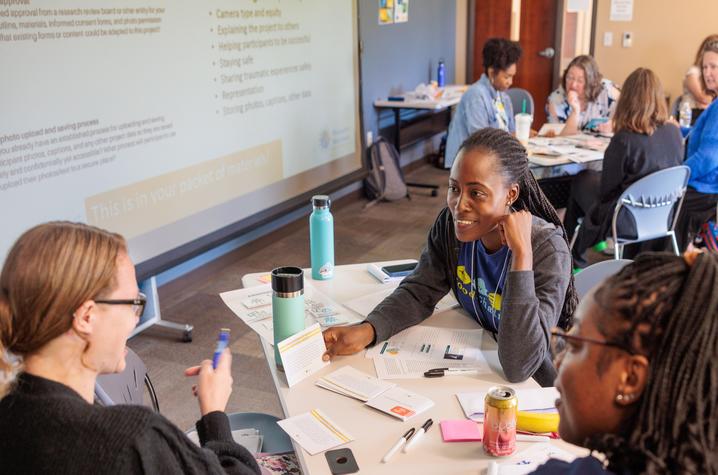
In June 2025, the SECoP hosted a Photovoice training for 38 people (beginning and advanced tracks) with the help of Photovoice Worldwide. Participants left with a better understanding of how storytelling can contribute to systems change.
Storytelling and community-based practices involve everyone, according to Breazeale.
“We are all storytellers,” Breazeale said. “Through stories, we are giving people a voice and it’s helping practitioners, researchers and professionals do their jobs better. We need everyone in the community to participate.”
Learn more about UK Land-grant Engagement resources and initiatives.
As the state’s flagship, land-grant institution, the University of Kentucky exists to advance the Commonwealth. We do that by preparing the next generation of leaders — placing students at the heart of everything we do — and transforming the lives of Kentuckians through education, research and creative work, service and healthcare. We pride ourselves on being a catalyst for breakthroughs and a force for healing, a place where ingenuity unfolds. It's all made possible by our people — visionaries, disruptors and pioneers — who make up 200 academic programs, a $1.02 billion research and development enterprise and a world-class medical center, all on one campus.