


Heat safety tips as students return to outdoor sports and activities
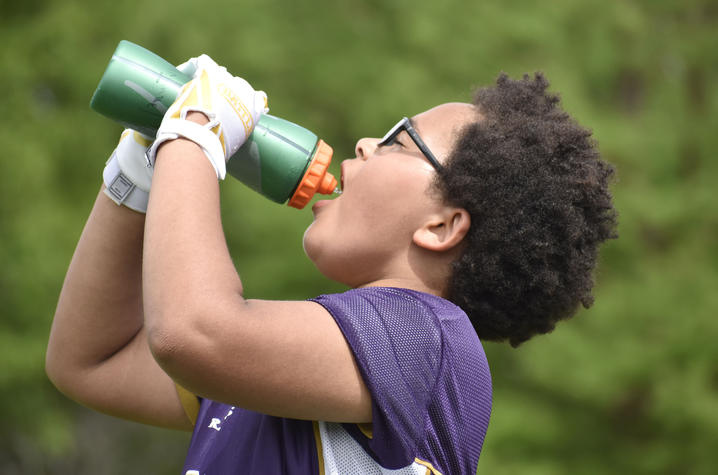
The University of Kentucky Public Relations & Strategic Communications Office provides a weekly health column available for use and reprint by news media. This week’s column is by Matthew Smitley, D.A.T., assistant professor in the College of Health Sciences’ Department of Athletic Training and Clinical Nutrition.
LEXINGTON, Ky. (Aug. 31, 2026) — School is back in session, which means outdoor sports and activities are in full swing. But the summer temperatures haven’t cooled off yet. The high temperatures and humidity can quickly turn outdoor fun into a health risk if you’re not careful.
The best way to prevent heat-related illness is to plan ahead.
-
Whenever possible, gradually increase how long and how hard you are active in the heat over one to two weeks.
-
Consider your best options to cool someone down quickly in an emergency and have a plan for getting medical help.
-
Try to schedule outdoor activities during the cooler morning or evening hours.
-
Wear lightweight and light-colored clothing.
-
Seek shade when possible.
-
Drink water regularly throughout the day.
If you anticipate having to be active in the heat, start well hydrated and have fluids readily available while you are active. It’s also important to recognize the signs that your body may be struggling with the heat.
Symptoms of heat-related illness can include:
- Muscle cramps
- Heavy sweating
- Fatigue or weakness
- Headache
- Dizziness
- Nausea
If any of these symptoms occur:
- Stop the activity.
- Move to a cool place.
- Remove unnecessary clothing/equipment and cool the person’s body.
- If the person is alert, not vomiting, and able to safely drink, provide cool fluids.
- Do not resume strenuous activity that day if heat exhaustion is suspected.
More serious symptoms may signal heat exhaustion or heat stroke and should never be ignored.
Seek medical attention if someone experiences:
- Vomiting
- Feeling faint
- Symptoms that do not improve after cooling down
- Increasing weakness
Heat stroke is a medical emergency and can become life-threatening within minutes.
Call 911 immediately if a person develops signs of heat stroke, including:
- Stumbling or unusual behavior
- Confusion or altered mental status
- Fainting or collapsing
- Slurred speech
- Loss of consciousness
- Seizures
- Very high body temperature
While waiting for emergency help, move the person to a cooler area and begin cooling them with cold water, wet towels, ice and fans. If available, cold-water immersion is the best way to cool someone with suspected heat stroke.
It’s still important to enjoy your time outdoors, but take the heat seriously. Staying hydrated, taking breaks and knowing the warning signs of heat-related illness can help keep you and those around you safe all summer long.
UK HealthCare is the hospitals and clinics of the University of Kentucky. But it is so much more. It is more than 10,000 dedicated healthcare professionals committed to providing advanced subspecialty care for the most critically injured and ill patients from the Commonwealth and beyond. It also is the home of the state’s only National Cancer Institute (NCI)-designated Comprehensive Cancer Center, a Level IV Neonatal Intensive Care Unit that cares for the tiniest and sickest newborns and the region’s only Level 1 trauma center.
As an academic research institution, we are continuously pursuing the next generation of cures, treatments, protocols and policies. Our discoveries have the potential to change what’s medically possible within our lifetimes. Our educators and thought leaders are transforming the healthcare landscape as our six health professions colleges teach the next generation of doctors, nurses, pharmacists and other healthcare professionals, spreading the highest standards of care. UK HealthCare is the power of advanced medicine committed to creating a healthier Kentucky, now and for generations to come.