


UK Plant Disease Diagnostic Lab earns national accreditation in its 50th year
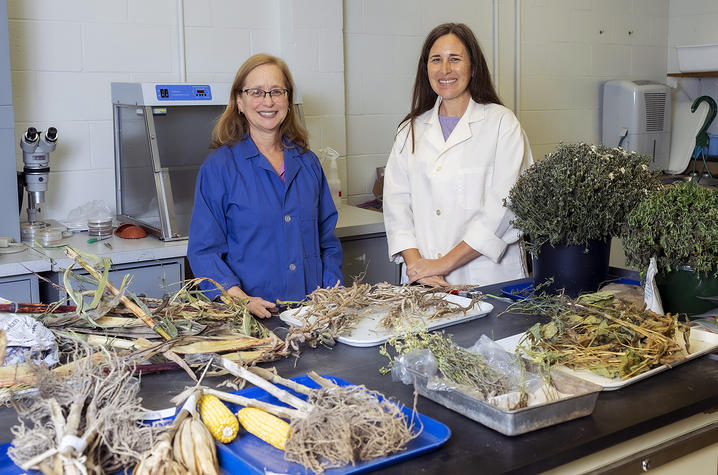
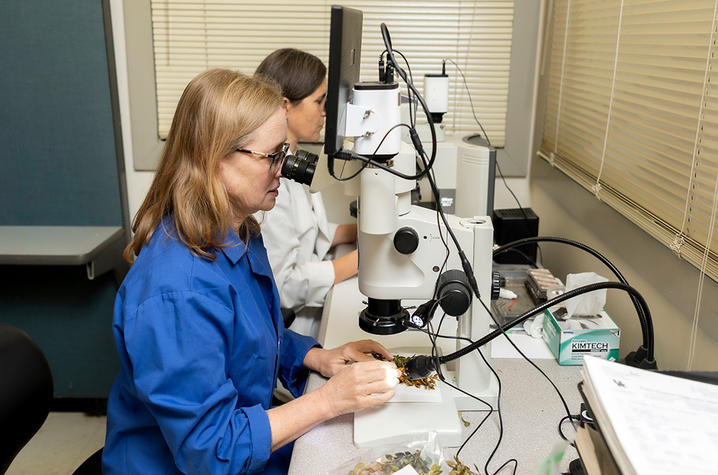
LEXINGTON, Ky. (Oct. 9, 2026) — The University of Kentucky Plant Disease Diagnostic Laboratory (PDDL) at the Martin-Gatton College of Agriculture, Food and Environment (CAFE) has earned Core Accreditation from the National Plant Diagnostic Network (NPDN), marking a national recognition of diagnostic quality as the laboratory celebrates 50 years of service to Kentucky agriculture.
The designation, effective Sept. 1, recognizes the quality management system developed and implemented by Julie Beale, PDDL director and diagnostician, and Sara Long, diagnostician. Both are in the Department of Plant Pathology.
“This accreditation demonstrates our commitment to quality procedures and continuous improvement,” Beale said. “Documenting everything we do enhances our work, preserves that knowledge for future employees and helps the UK laboratory continue providing reliable diagnoses for Kentucky.”
According to the NPDN, UK’s PDDL system meets the requirements of the network’s Core Accreditation Program, which establishes consistent standards for plant diagnostic laboratories nationwide. Beale said the accreditation requires laboratories to document how they receive samples, conduct and record tests, maintain and calibrate equipment, report findings, and review procedures. The framework helps ensure that diagnostic work is timely, accurate, repeatable and ready to adapt as methods improve.
The milestone comes 50 years after UK hired its first plant disease diagnostician in 1976. Today, the lab serves as an educational and diagnostic resource for Kentucky Cooperative Extension agents, growers, homeowners and green industry professionals. It evaluates problems affecting field and horticultural crops, home gardens, trees, shrubs, nurseries, landscapes and forests, and reports its findings weekly in the Kentucky Pest News newsletter.
Beale said that most samples reach the lab through county Extension agents, who work with clients to gather information and submit plant material when a problem requires additional expertise or laboratory testing. When a sample points to an insect, soil or crop-management issue rather than a disease, diagnosticians collaborate with UK specialists in entomology, forestry and crops.
“We are helping individual growers with a specific problem so they can protect their crop and know how to manage it,” Beale said. “But there is also a broader goal. We are on the front lines of safeguarding agriculture from exotic and emerging plant diseases.”
Established in 2002 with support from the U.S. Department of Agriculture’s National Institute of Food and Agriculture and the Office of Homeland Security, the National Plant Diagnostic Network links plant diagnostic laboratories in all 50 states and four U.S. territories. The network supports early detection and identification of plant pests and diseases that could threaten agricultural production and natural ecosystems.
In 2024, NPDN laboratories entered 225,829 diagnoses into the network’s National Data Repository, representing 78% of U.S. counties. Laboratories also reported 193 first detections — organisms found in a state for the first time. NPDN reports that consistent quality standards strengthen the network’s ability to share reliable information and respond to unusual or potentially high-consequence findings.
The UK PDDL’s geographic location gives the lab an important vantage point. Beale said the differences in crops and growing conditions across the state expose diagnosticians to a wide range of plant problems, and Kentucky’s position between northern and southern production regions can help specialists recognize when a pathogen is moving into new territory.
Beale joined the lab in 1996 and became its director in 2023. Long, a UK horticulture graduate who gained laboratory experience as a student, joined the diagnostic lab in 2005. Department of Plant Pathology Chair Gary Munkvold, Ph.D., said their experience helped guide the multiyear accreditation process and the development of written procedures to support training, continuity and future improvements.
“The UK PDDL is nationally recognized as a reliable resource for accurate, professional plant disease information, and the accreditation by NPDN reinforces that reputation,” Munkvold said. “It comes at an opportune moment, as the Lexington lab transitions to new facilities, and plans are in motion to reopen the UK Research and Education Center (UKREC) branch of the PDDL in Western Kentucky. The PDDL is a crucial component of the UK Plant Pathology Department that demonstrates the department’s commitment to Kentucky agriculture."
Beale and Long expect to move soon to a larger, state-of-the-art space in UK’s new Agricultural Research Building. Munkvold said he expects the UKREC branch to reopen in early 2027. These facilities are expected to expand the lab’s capacity and support new services for Kentucky clients.
For help identifying a plant problem or information about submitting a sample, contact your county Cooperative Extension Service office.
As the state’s flagship, land-grant institution, the University of Kentucky exists to advance the Commonwealth. We do that by preparing the next generation of leaders — placing students at the heart of everything we do — and transforming the lives of Kentuckians through education, research and creative work, service and healthcare. We pride ourselves on being a catalyst for breakthroughs and a force for healing, a place where ingenuity unfolds. It's all made possible by our people — visionaries, disruptors and pioneers — who make up 200 academic programs, a $1.02 billion research and development enterprise and a world-class medical center, all on one campus.