


Markey patient cancer-free after landmark CAR-T treatment
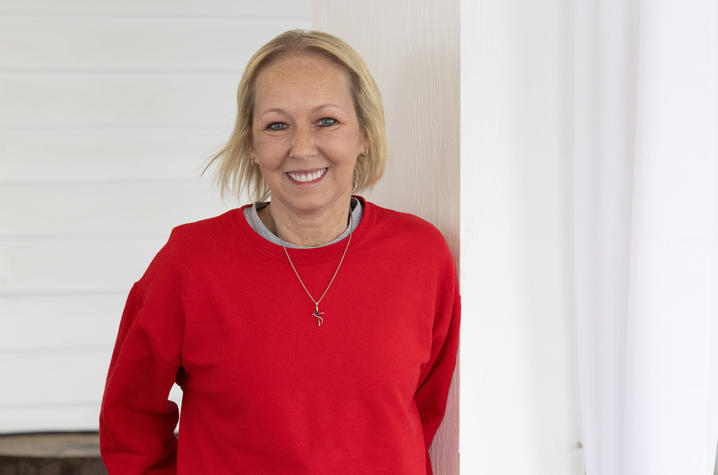

LEXINGTON, Ky. (Dec. 12, 2025) — In 2022, Vikki Lane thought she had laryngitis. When her voice wouldn’t come back, she went to the hospital, where doctors found a tumor the size of a softball in her chest, large enough to break two bones in her back. The 52-year-old from Campbellsville was diagnosed with small cell lung cancer that had already spread to her brain. She was given two months to live.
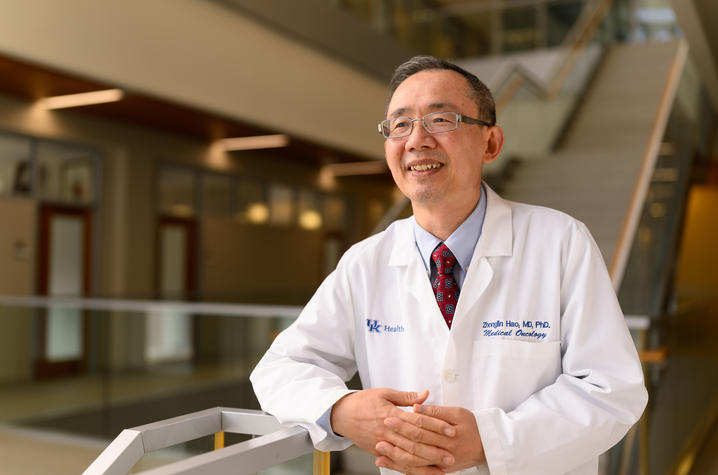
After the standard treatments — chemotherapy, radiation and immunotherapy — stopped working, Vikki was referred to Zhonglin Hao, M.D., Ph.D., a medical oncologist at the University of Kentucky Markey Cancer Center.
“With standard treatments failing, Vikki still had options through clinical trials,” said Hao.
Fighting for an emergency option
Hao was leading a clinical trial at UK Markey Cancer Center using CAR-T cell therapy to treat small cell lung cancer, a new use of a treatment typically reserved for blood cancers like leukemia and lymphoma.
CAR-T cell therapy involves removing a patient’s own T-cells — white blood cells that fight disease — and genetically modifying them in a lab to recognize and attack cancer cells. The modified cells are then infused back into the patient.
“CAR-T cell therapy is not currently approved for lung cancer, making the trial an important step in exploring new treatment options,” said Hao, co-director of Markey’s Thoracic Oncology Program and medical director of Markey’s Clinical Research Office.
Vikki became ineligible for the clinical trial due to concerns about side effects from medication she was taking for her back pain, so Hao applied to the Food and Drug Administration for authorization so she could receive the treatment outside of the trial. This emergency investigational new drug authorization can be used in situations like Vikki’s, when time is critical and standard treatment options have been exhausted.
The FDA approved Hao’s request, and Vikki received the CAR-T cell therapy on Sept. 9, 2024. The 90-minute infusion required one day of hospitalization to monitor for potential side effects.
“After chemo and radiation, it would always take me a while to ‘catch my balance,” Vikki said. “But after getting this treatment, I was surprised that I had no sickness whatsoever. I just felt normal… and it had been a while since I could say that.”
One year later, Vikki shows no signs of disease. The tumor in her chest is gone, and the cancer in her brain became necrotic and gradually disappeared. She says the treatment has allowed her to return to daily activities like driving, shopping, and spending time with her kids and grandkids.
“I couldn’t ask for anything more than what Markey and Dr. Hao have done for me,” Vikki said. “I just feel wonderful. I really do. I’m blessed.”
A promising treatment approach
Vikki was among the first patients in the U.S. to receive CAR-T cell therapy for small cell lung cancer that had spread to the brain. Her case shows how clinical research brings new treatments to patients years before they become widely available.
“Vikki’s case demonstrates the potential of CAR-T cell therapy to treat solid tumors that have spread to the brain,” said Hao, who is writing up the case for publication in a medical journal. “Seeing her cancer-free one year later is incredibly encouraging and shows why we must continue exploring innovative treatments for patients with limited options.”
Markey is one of 57 National Cancer Institute-designated Comprehensive Cancer Centers in the nation. This designation allows Markey to conduct clinical trials and offer treatments like CAR-T cell therapy to patients across Kentucky who might otherwise need to travel out of state for access to advanced care.
Vikki hopes her story will encourage other patients facing difficult diagnoses.
“I want people not to be afraid like I was,” she said. “I knew I only had one chance to be able to live, and I got to thinking if this works on me, other people could benefit too. If you have doctors willing to fight for you like Dr. Hao fought for me, trust them.”
UK HealthCare is the hospitals and clinics of the University of Kentucky. But it is so much more. It is more than 10,000 dedicated healthcare professionals committed to providing advanced subspecialty care for the most critically injured and ill patients from the Commonwealth and beyond. It also is the home of the state’s only National Cancer Institute (NCI)-designated Comprehensive Cancer Center, a Level IV Neonatal Intensive Care Unit that cares for the tiniest and sickest newborns and the region’s only Level 1 trauma center.
As an academic research institution, we are continuously pursuing the next generation of cures, treatments, protocols and policies. Our discoveries have the potential to change what’s medically possible within our lifetimes. Our educators and thought leaders are transforming the healthcare landscape as our six health professions colleges teach the next generation of doctors, nurses, pharmacists and other healthcare professionals, spreading the highest standards of care. UK HealthCare is the power of advanced medicine committed to creating a healthier Kentucky, now and for generations to come.