


Markey, Barnstable Brown study maps US diabetes-cancer hotspots
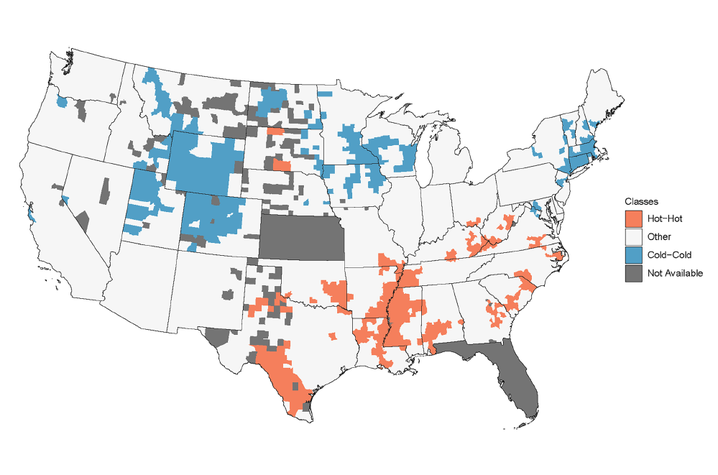
LEXINGTON, Ky. (March 5, 2026) — A new University of Kentucky study has mapped areas across the U.S. where high rates of diabetes and deaths from diabetes-related cancers overlap. The UK Markey Cancer Center and Barnstable Brown Diabetes Center research reveals patterns that could help target life-saving interventions.
People with diabetes are more likely to develop certain cancers, including those of the liver, colon, endometrium and breast, and they face higher mortality rates from these cancers as well as from pancreatic and bladder cancers.
Published in Cancer Causes & Control, the study is the first to examine the relationship between diabetes prevalence and associated cancer mortality at the county level. Using data from more than 3,100 U.S. counties, the research team applied a method called hotspot analysis to identify where both conditions cluster together. Counties flagged as high risk were more likely to be rural and had higher rates of poverty, unemployment and residents without a college education.
The highest-burden areas identified include rural communities in the Mississippi Delta, Appalachian Kentucky, southern Texas and tribal areas of South Dakota.
“The biggest implication is that health care providers in high-risk regions can now use this geographic data to be more proactive about cancer screening for patients with diabetes, potentially catching cancers earlier when they’re most treatable and saving lives in communities that have historically had the worst health outcomes,” said Nathan Vanderford, Ph.D., the study’s principal investigator and an associate professor in UK’s College of Medicine.
The researchers recommend that providers in these regions prioritize cancer screenings for patients with diabetes and work to address compounding risk factors such as smoking and obesity.
“As a future physician, I see significant value in having data-driven guidance that can lead to targeted health care for a patient population,” said the study’s first author Lauren Hudson Rose, a College of Medicine student in the UK Diabetes and Obesity Research Priority Area’s Diabetes and Obesity Summer Research Fellows Program. “This is the type of population-level information that has significant potential to improve patient outcomes.”
Additional research team members include Todd Burus, Ph.D., an assistant professor in the College of Medicine and member of Markey’s Community Impact Office, and Mary E. Lacy, Ph.D., an assistant professor of epidemiology in the College of Public Health.
Research reported in this publication was supported by the National Cancer Institute of the National Institutes of Health under Award Numbers P30CA17755 and R25CA221765. The content is solely the responsibility of the authors and does not necessarily represent the official views of the National Institutes of Health.
UK HealthCare is the hospitals and clinics of the University of Kentucky. But it is so much more. It is more than 10,000 dedicated healthcare professionals committed to providing advanced subspecialty care for the most critically injured and ill patients from the Commonwealth and beyond. It also is the home of the state’s only National Cancer Institute (NCI)-designated Comprehensive Cancer Center, a Level IV Neonatal Intensive Care Unit that cares for the tiniest and sickest newborns and the region’s only Level 1 trauma center.
As an academic research institution, we are continuously pursuing the next generation of cures, treatments, protocols and policies. Our discoveries have the potential to change what’s medically possible within our lifetimes. Our educators and thought leaders are transforming the healthcare landscape as our six health professions colleges teach the next generation of doctors, nurses, pharmacists and other healthcare professionals, spreading the highest standards of care. UK HealthCare is the power of advanced medicine committed to creating a healthier Kentucky, now and for generations to come.