


Eric King appointed to National Petroleum Council
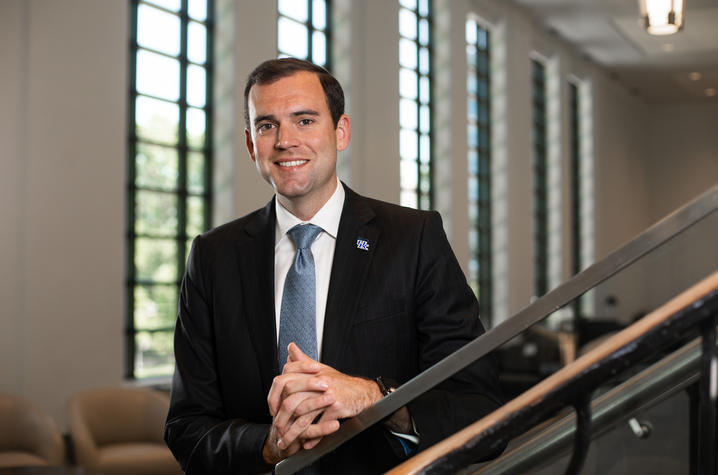
LEXINGTON, Ky. (June 10, 2026) — Eric King, executive director of the Kentucky Energy Planning and Inventory Commission (EPIC), has been appointed to the National Petroleum Council (NPC) by U.S. Energy Secretary Chris Wright. The NPC is a federally chartered advisory body that advises the energy secretary on matters relating to oil, natural gas and the broader domestic energy supply.
EPIC is administratively tied to the University of Kentucky’s Center for Applied Energy Research (CAER) and was created by the 2024 General Assembly to conduct independent energy planning and analysis for the Commonwealth and was expanded by Senate Bill 100 in the 2026 legislative session. The agency has published Kentucky’s first comprehensive electricity generating capacity inventory, completed the state’s first statutory generation retirement review, and is currently developing the Kentucky Electricity Adequacy Plan (KEAP).
Concurrently, EPIC is releasing a technical analysis of cost allocation for large-load data centers to ensure Kentucky remains competitive for data center investment while protecting existing ratepayers from bearing the infrastructure costs of that growth. King was unanimously confirmed by the Kentucky State Senate and has served as EPIC’s executive director since October 2025.
Before leading EPIC, King served as assistant vice president of federal relations at UK for 11 years, directing the institution’s federal policy strategy. He previously served as an energy advisor to then U.S. Senate Republican Leader Mitch McConnell, and as director of government relations for the Kentucky Electric Cooperatives. His appointment to the NPC gives EPIC a direct connection to the federal advisory process as the agency continues its work on electricity adequacy planning, generation retirement reviews and long-term energy supply analysis for the Commonwealth.
The National Petroleum Council has operated as one of the federal government’s most consequential and longstanding outside advisory bodies on energy for eight decades. Membership is by invitation of the energy secretary and is drawn from senior leadership across the American energy industry, including CEOs from oil and gas producers, pipeline and transmission companies, refiners, electric utilities, trade associations and research institutions, as well as select state and public officials. State-level energy officials make up a small fraction of the federal council.
King, a McLean County, Kentucky, native and Murray State University graduate, where he served on the Board of Regents, said the appointment puts Kentucky directly inside the federal government’s most important energy advisory process.
“The NPC advises the Secretary of Energy on domestic supply, grid reliability and energy infrastructure. Those are the same issues EPIC analyzes for the General Assembly and Kentucky ratepayers,” King said. “Being part of that federal conversation means Kentucky’s circumstances are on the table when the secretary is weighing the big decisions, and what we learn there feeds directly back into the work we do here at home.”
Kentucky Senate President Robert Stivers of Manchester welcomed the appointment.
“The National Petroleum Council brings together the senior leadership of the American energy industry to give the federal government straight advice on supply, infrastructure and reliability,” Stivers said. “Kentucky now has a seat at that table, and that matters for our coal communities, our natural gas producers, and every family and business in this state that depends on affordable power.”
Kentucky House Speaker David Osborne of Prospect pointed to Kentucky’s dual role as both an energy producer and a manufacturing state that depends on competitive energy costs.
“With Eric’s appointment, Kentucky again plays a meaningful role in shaping the future of national energy policy — not only as a producer and manufacturer, but as a state where access to affordable, reliable energy is essential to everyday life and economic stability,” Osborne said. “For generations, the National Petroleum Council has provided independent guidance to the secretary of energy. Now, Kentucky has a seat at that table, ensuring its perspective is part of these important conversations. That voice represents the needs of individuals and families who depend on sound energy policy and the industries that create jobs and power our economy.”
Kentucky state Sen. Robby Mills of Henderson, who authored EPIC’s enabling legislation, tied the appointment to what the General Assembly set out to build.
“When we created EPIC, we envisioned Kentucky serving as a serious and respected voice in the national energy discussion. The National Petroleum Council has helped shape federal energy policy for decades and having Kentucky represented matters,” Mills said. “Eric’s appointment speaks both to the credibility EPIC is building and to Kentucky’s increasing importance in the future of American energy.”
Kentucky Chamber President and CEO Ashli Watts said the appointment puts Kentucky where it belongs.
“I’ve watched Eric build EPIC from scratch all in under a year. He doesn’t just understand Kentucky’s energy challenges — he’s already working to solve them,” Watts said. “Having him inside the National Petroleum Council means the people advising the secretary of energy will hear a voice that knows exactly what affordable, reliable power means to Kentucky workers, families and the businesses that employ them.”
The NPC meets in Washington, D.C., and primarily conducts its work through study committees that prepare formal reports for the energy secretary. Past studies have covered domestic natural gas supply, electric power infrastructure, transportation fuels and long-term energy security.
As the state’s flagship, land-grant institution, the University of Kentucky exists to advance the Commonwealth. We do that by preparing the next generation of leaders — placing students at the heart of everything we do — and transforming the lives of Kentuckians through education, research and creative work, service and healthcare. We pride ourselves on being a catalyst for breakthroughs and a force for healing, a place where ingenuity unfolds. It's all made possible by our people — visionaries, disruptors and pioneers — who make up 200 academic programs, a $1.02 billion research and development enterprise and a world-class medical center, all on one campus.