


UK study finds blood clues to serious side effects of new Alzheimer’s drug
LEXINGTON, Ky. (March 9, 2026) — A team of University of Kentucky researchers has uncovered a surprising clue in the battle against Alzheimer’s disease that could help doctors predict, and ultimately prevent, a common side effect of the newest generation of Alzheimer’s therapies. Their findings, recently published in Nature Communications, reveal a distinct immune “fingerprint” in the blood of patients who develop amyloid-related imaging abnormalities (ARIA) after treatment with lecanemab — the first Food and Drug Administration-approved drug shown to slow Alzheimer’s disease progression. The study was recognized as an Editors’ Highlight by Nature Communications, a designation the journal reserves for research its editors consider particularly noteworthy and impactful.
ARIA, which can show up as brain swelling or small bleeds on MRI scans, is one of the biggest obstacles to broader use of the promising anti-amyloid antibody therapies now becoming available. Before now, clinicians and families have had little to go on to explain why some people develop these side effects and others do not.
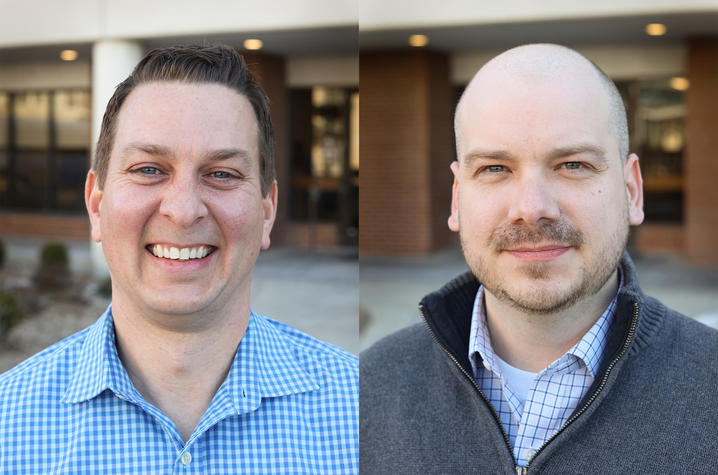
“We asked a simple question: do people who develop ARIA show a different immune ‘fingerprint’ in their blood than those who don’t? The answer appears to be yes,” said Josh Morganti, Ph.D., assistant professor of neuroscience in the UK College of Medicine and researcher at the University of Kentucky’s Sanders-Brown Center on Aging.
Using advanced genetic and metabolic profiling on blood samples from patients treated with lecanemab at Norton Neuroscience Institute in Louisville, Morganti and colleagues found that people who developed ARIA had an expansion of a specific type of immune cell — a subset of T cells — that was metabolically “revved up” and poised for action.
“This isn’t random noise. We’re seeing a coordinated immune response that distinguishes patients with ARIA at a biological level,” he said.
Critically, the study shows that this signal can be detected in a simple blood draw, not through invasive procedures.
“Until now, we really didn’t understand why some people develop ARIA and others don’t,” Morganti said. “And we can’t biopsy someone’s brain to figure that out. This study shows that we can learn something meaningful from the blood, which is an important step if we ever want to turn these findings into a real-world screening tool.”
Lance Johnson, Ph.D., associate professor of physiology and researcher at Sanders-Brown, said the findings set the stage for a more personalized approach to Alzheimer’s care.
“We now know that ARIA isn’t just an imaging artifact,” Johnson said. “There’s biology behind it that we can measure. That means we have something to work with.”
Before this research, the primary risk factor clinicians knew for ARIA was genetic: carriers of the APOE ε4 gene variant were at higher risk. But what was happening biologically remained mysterious. The UK team’s work — the first in-depth look at the peripheral immune system in ARIA patients — reveals that certain T cells expand, shift their metabolism and express the molecular machinery needed to interact with the vascular system.
“This suggests ARIA may have a biological signature we can detect in the blood,” said Johnson.
A path toward prediction and better treatment
The ultimate goal of this work is to make Alzheimer’s immunotherapies safer and more accessible. The immune signatures the UK researchers identified could, after validation in larger patient groups, become the basis for a blood test to flag individuals at higher risk before they begin treatment.
“If we can validate these findings in larger groups, clinicians could adjust treatment — closer monitoring, different dosing schedules or even targeted interventions — based on a patient’s immune profile,” said Morganti. “For people and families facing an Alzheimer’s diagnosis, anything that makes these new treatments safer and more accessible is meaningful.”
Johnson agreed: “Right now, ARIA is a cloud hanging over these otherwise groundbreaking therapies. If we can use this work to help predict or even prevent these side effects, it will be a big step forward.”
Both researchers emphasized that they are not there yet, but this study pushes the field past guesswork into measurable biological terrain.
Collaboration, support and gratitude
This work was made possible through strong partnerships and dedicated funding. The study was supported by the Alzheimer’s Association, whose joint grant to Johnson and Morganti played a crucial role, as well as funding from the National Institutes of Health’s National Institute on Aging, National Institute of Neurological Disorders and Stroke, National Center for Advancing Translational Sciences and National Institute of General Medical Sciences that funds the CNS Metabolism COBRE program.
The UK research team expressed their grateful for the indispensable contribution of Norton Neuroscience Institute and Norton Research Institute in Louisville.
“I’m incredibly proud of the work our team has done to bring hope to patients facing an Alzheimer’s diagnosis,” said Gregory E. Cooper, M.D., Ph.D., chief of adult neurology and director of the Norton Neuroscience Institute Memory Center. “These findings have the potential to significantly improve the safety and precision of care for patients undergoing anti-amyloid therapy. This collaboration is a powerful example of what can be achieved when experts unite around a shared purpose. I look forward to building on this momentum as we continue advancing research and improving the lives of those affected by Alzheimer’s disease.”
Both Johnson and Morganti agree that the collaboration exemplifies how academic medical centers can extend their research through relationships with community-based clinical programs.
“Lecanemab-treated patients represent a rare and difficult-to-access population,” said Morganti. “Dr. Cooper and his team’s energy and enthusiasm to collaborate — coordinating care and research sample collection during active treatment — made this work possible.”
Research reported in this publication was supported by the National Institute on Aging of the National Institutes of Health under Award Numbers R01AG081421 and R01AG080589, the National Institute of Neurological Disorders and Stroke of the National Institutes of Health under Award Number RF1NS118558, the National Center for Advancing Translational Sciences of the National Institutes of Health under Award Number TL1TR001997 and the National Institute of General Medical Sciences of the National Institutes of Health under Award Number P20GM148326. The content is solely the responsibility of the authors and does not necessarily represent the official views of the National Institutes of Health.
Research reported in this publication was also supported by the Alzheimer’s Association under grant ABA-25-1376140.
As the state’s flagship, land-grant institution, the University of Kentucky exists to advance the Commonwealth. We do that by preparing the next generation of leaders — placing students at the heart of everything we do — and transforming the lives of Kentuckians through education, research and creative work, service and healthcare. We pride ourselves on being a catalyst for breakthroughs and a force for healing, a place where ingenuity unfolds. It's all made possible by our people — visionaries, disruptors and pioneers — who make up 200 academic programs, a $1.02 billion research and development enterprise and a world-class medical center, all on one campus.