


UK field day helps Kentucky farmers explore practical tools and technology
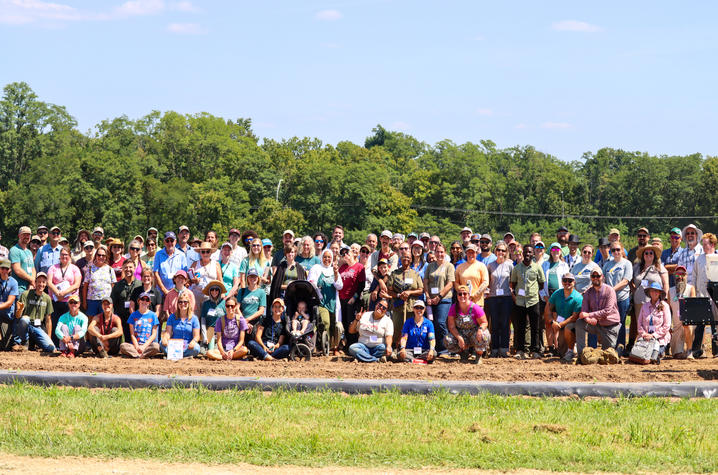
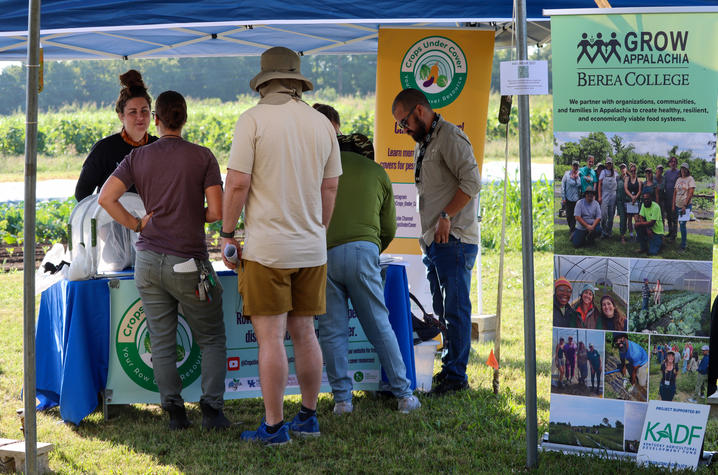
LEXINGTON, Ky. (Oct. 6, 2026) — The University of Kentucky Horticulture Research Farm, part of the Martin-Gatton College of Agriculture, Food and Environment (CAFE), welcomed 127 growers and agricultural professionals on Aug. 25 for the Appropriate Tools and Technologies Field Day.
Hosted by UK’s Center for Crop Diversification (CCD), the Organic Association of Kentucky (OAK) and the Kentucky Horticulture Council (KHC), the event featured educational sessions, field demonstrations and a trade show focused on practical equipment and technologies for crop production.
The field day inspiration grew from a 2024 trip to Purdue University, where Alexis Sheffield, UK horticulture extension specialist and CCD co-director; Sarah Guerkink, organic production specialist with OAK; and 12 Kentucky crop farmers attended the Midwest Mechanical Weed Control Field Day.
“One thing we heard clearly from our group was the need for more equipment and technologies designed with the small- to mid-sized farmers in mind,” Sheffield said.
That feedback led CCD and OAK to host Kentucky’s first Mechanical Weed Control Field Day in 2025. Grower feedback from that event identified propagation and transplanting as areas where farmers wanted to improve efficiency, reduce bottlenecks and increase success.
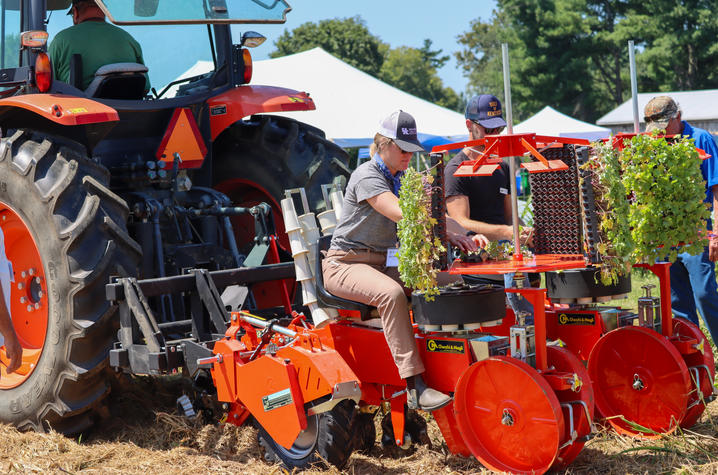
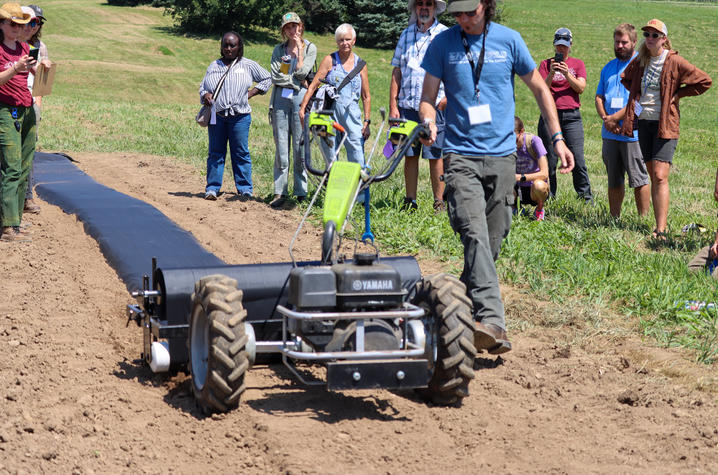
Those needs shaped this year’s field day, which featured equipment for seeding, transplanting and irrigation, along with sessions on topics including high tunnel soil steaming and solarization, growing media, grafting, seeding challenging crops and greenhouse conditions. Sixteen vendors participated, giving growers opportunities to see equipment in operation and consider how different technologies might fit their farms.
“A technology that looks great on paper isn’t necessarily the right fit once you consider the realities of a small farm such as available labor, field conditions, crop mix, acreage, cost and how often the equipment will actually be used,” Sheffield said.
Cameron Hill, director of North America at Global Ag Company, demonstrated Checchi and Magli’s Trium no-till transplanter and Wolf Pro plastic transplanter.
“Customers were highly engaged, asked great questions, and showed strong interest in the technology,” Hill said. “Overall, it was great to connect with growers, and the event was very successful.”
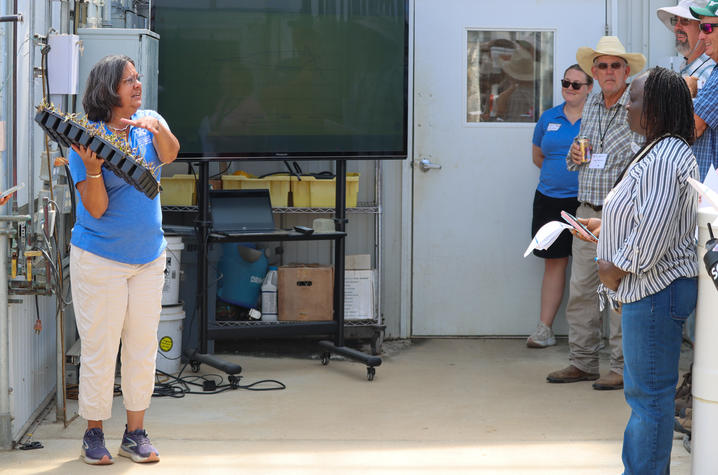
Educational sessions also addressed challenges earlier in the growing process. Shari Dutton, agriculture extension associate in the UK Department of Horticulture, shared techniques for successfully starting plants from very small seeds, including proper growing conditions, watering, sanitation and seed-sowing methods.
“Many beginning and experienced growers alike find starting and growing plants from very small seeds a challenge,” Dutton said. “My hope is that the tips I shared would remove some common barriers to success when it comes to growing transplants.”
The event also included exhibitors from organizations and UK programs supporting Kentucky agriculture, including Community Farm Alliance, KCARD, Grow Appalachia and UK Plant Pathology. Lunch featured local food from UK’s Food Connection. Forty-three volunteers and UK Horticulture Research Farm staff helped prepare demonstration areas and lead sessions.
For Sheffield, the event was as much about conversation as equipment.
“Most importantly, we wanted the day to be a conversation,” she said. “The best ideas for future programming often come directly from farmers telling us where the pinch points are in their operations.”
As the state’s flagship, land-grant institution, the University of Kentucky exists to advance the Commonwealth. We do that by preparing the next generation of leaders — placing students at the heart of everything we do — and transforming the lives of Kentuckians through education, research and creative work, service and healthcare. We pride ourselves on being a catalyst for breakthroughs and a force for healing, a place where ingenuity unfolds. It's all made possible by our people — visionaries, disruptors and pioneers — who make up 200 academic programs, a $1.02 billion research and development enterprise and a world-class medical center, all on one campus.