


UK Police hosts campus, health care and public safety leaders for Safer Kentucky Symposium
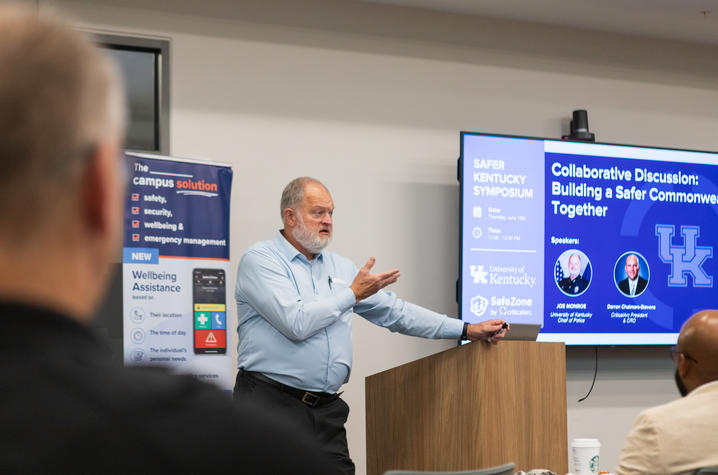
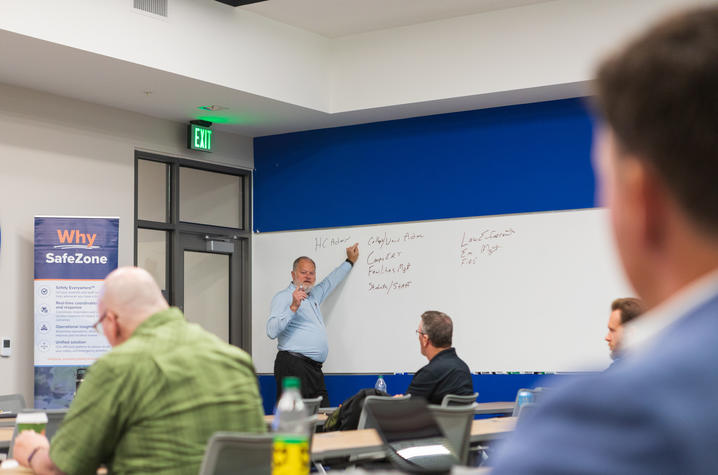
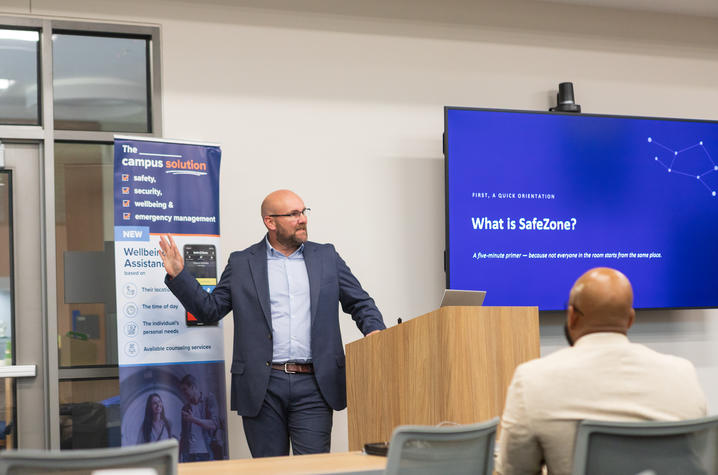
LEXINGTON, Ky. (June 24, 2026) — The University of Kentucky Police Department brought together leaders from private colleges, public universities, health care institutions, public safety agencies, emergency management and student affairs for the Safer Kentucky Symposium, a statewide conversation focused on strengthening safety through communication, coordination and shared responsibility.
The first-of-its-kind event, led by UK Police Chief Joe Monroe and held in partnership with CriticalArc, focused on a clear goal: helping Kentucky become a national model for connected safety across campuses, hospitals and communities.
“Safety does not stop at the edge of a campus, a hospital or a city line,” Monroe said. “The challenges we face are connected, and our response must be connected, too. By working together, Kentucky has an opportunity to set the standard for how institutions prepare, communicate and protect the people they serve.”
Throughout the day, participants discussed how challenges to safety increasingly cross institutional boundaries. A concern that begins on a college campus may affect a hospital, public safety agency or surrounding community. Likewise, incidents involving severe weather, workplace violence, behavioral health, civil unrest or cyber disruption can require a coordinated response from multiple partners.
The symposium emphasized that a safer Kentucky will not be built by asking every organization to operate the same way. Instead, speakers and attendees focused on how institutions with different missions, resources and environments can better connect before, during and after a crisis.
Monroe framed the effort as both practical and urgent. Kentucky’s colleges, universities, hospitals and public safety agencies serve many of the same people — students, patients, employees, clinicians, visitors and families — who move across institutional and community boundaries every day.
CriticalArc President and Chief Revenue Officer Darren Chalmers-Stevens joined Monroe in presenting a vision for a more connected safety ecosystem. The discussion highlighted the role technology and real-time communication can play in helping organizations share information, improve situational awareness and coordinate response when seconds matter.
“Kentucky does not need to wait for a national model,” Monroe said. “Kentucky can become the model.”
The day concluded with a focus on moving from vision to action. Participants identified practical next steps, including creating a formal partnership, strengthening regular communication among institutions, identifying primary points of contact, developing a shared training and exercise calendar, sharing after-action lessons and creating opportunities for continued statewide collaboration.
As the state’s flagship, land-grant institution, the University of Kentucky exists to advance the Commonwealth. We do that by preparing the next generation of leaders — placing students at the heart of everything we do — and transforming the lives of Kentuckians through education, research and creative work, service and healthcare. We pride ourselves on being a catalyst for breakthroughs and a force for healing, a place where ingenuity unfolds. It's all made possible by our people — visionaries, disruptors and pioneers — who make up 200 academic programs, a $1.02 billion research and development enterprise and a world-class medical center, all on one campus.