


UK Art Museum finds connections between art and natural history
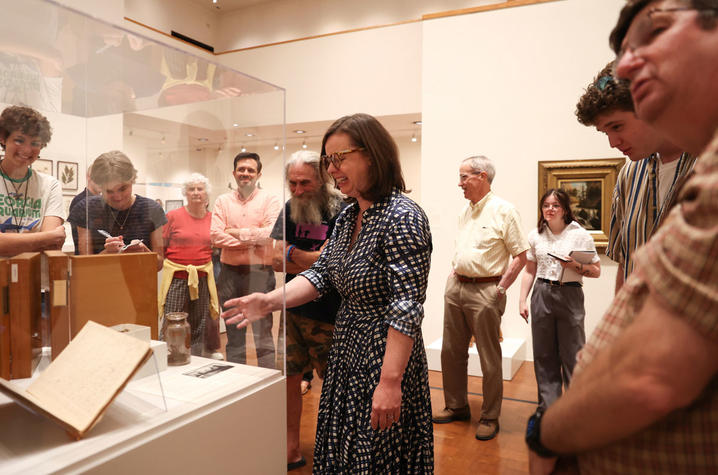
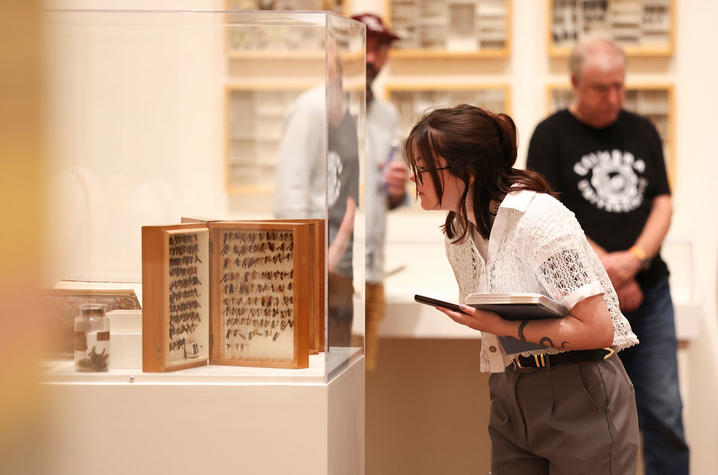
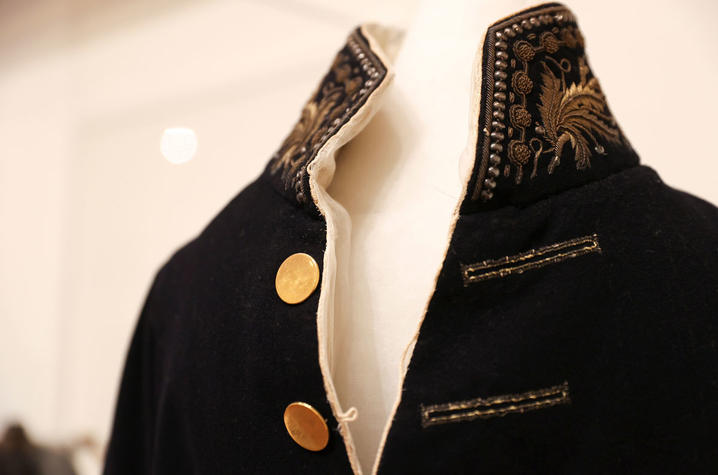
LEXINGTON, Ky. (Sept. 29, 2026) — It is approximately 15 inches in diameter, was pulled from the stomach of an unfortunate 19th century cow, might be the largest hairball on the planet and, through Dec. 19, it is one of the many and varied pieces on display in the University of Kentucky Art Museum exhibition titled “Museum of Natural History and Artificial Curiosities.”
The exhibition, which opened in August, celebrates the inspiration of UK’s first president, John Bowman, who decided in 1865 that Kentucky’s new land-grant university needed a museum as an instructional aid for faculty. It features pieces from the original museum that opened in 1867, and the giant hairball, borrowed from Transylvania University’s Monroe Moosnick Medical and Science Museum, is believed to be the oldest item from that original collection.
Rachel Hooper, Ph.D., the UK Art Museum curator, said the exhibition leans into the “curiosities” portion of its title for a good purpose.
“For me, curiosities have always played the role of being a little hook to the casual visitor,” she said. “Once you have them in — and I’m sure this was John Bowman’s thought as well — they can learn more about geology, botany, entomology, textiles.”
Not everyone believed in a broad interpretation of what was important to collect, though.
In her research, Hooper found the meticulous, “beautiful cursive script” records of Alexander Winchell, the first curator of UK’s museum, in which he listed all the objects in the museum collection.
“And then someone came in and wrote in pencil later, ‘Note: there are artificial curiosities in this collection that have no place in a museum of natural history and should be struck from this record,” Hooper said.
Which, she added, was how “artificial curiosities” made its way into the exhibition title.
In curating the exhibition, Hooper has included some contemporary work from the UK Art Museum’s own collection that reflects an interest in natural history.
“I’m looking at artists who are inspired by natural history methods of collection or who are questioning natural history methods of collection,” Hooper said.
One example is a collection of the late Kentucky artist Louis Zoellar Bickett, who gathered specimens and collected them in bottles, which he labeled related to his own life — places he’d visited, things he had seen, histories he was interested in learning about.
“He kind of created his own very, very idiosyncratic and personal museum of natural history,” Hooper said.
The exhibition also includes the work of two UK professors, Crystal Gregory in the College of Fine Arts’ School of Art and Visual Studies and Rebekah Radtke in the College of Design’s School of Interiors. Gregory has created a woven textile piece called “Holding Space,” which is dyed with colors derived from plants in the dye garden at The Arboretum, State Botanical Garden of Kentucky.
“What Crystal has discovered is that changes in weather patterns — like how much rain happens in a year, when the first frost comes, how hot the summers get — will change the color of the dye produced by the plants,” Hooper said. “She has this fascinating research book that she’s been keeping, and some of the threads she’s dyed from the garden are in the piece ‘Holding Space.’”
Radtke is involved in a project called “What the Water Left,” collecting data on water levels from the United States Geological Survey about the devastating 2022 floods in Eastern Kentucky. Along with the data, Radtke has collected runoff samples from the flooding, using them to dye cloth. She quilts the cloth together, and the stitching resembles the graphs of data collected on the flood.
“It’s a fascinating project, and I think it’s a perfect example of how the arts can be a connector across fields and how the collaboration between artists and geologists didn’t stop in the 19th century,” Hooper said. “They continue to this day.”
In researching the collection from UK’s original 1867 museum, Hooper found a quote from Bowman that she believes encapsulates the spirit of celebrating this unique collection.
“He said the purpose of the museum was ‘the character and reputation to institutions of learning.’ And I thought even to this day, that’s still true,” Hooper said. “To teach students how to hold themselves to the highest standards, how to adhere to shared community guidelines that all of us have for our disciplines: respect for objects, care for objects, thinking about the future. How can we ensure that this legacy is passed on to future generations in a responsible way?”
Related to this exhibition, the UK Art Museum will host “A Conversation On Curiosities, Collection, Collaborations, and Care,” noon-1 p.m. Friday, Oct. 30, in the Singletary Center for the Arts President’s Room. Hooper and curators from across the city of Lexington will discuss the legacy of the Museum of Natural History at Kentucky University and their current collections-based research. The event is free. Lunch is provided, but registration is required. The lunch is presented in partnership with the UK Office of the Vice President for Research and Arts and Health Alliance.
As the state’s flagship, land-grant institution, the University of Kentucky exists to advance the Commonwealth. We do that by preparing the next generation of leaders — placing students at the heart of everything we do — and transforming the lives of Kentuckians through education, research and creative work, service and healthcare. We pride ourselves on being a catalyst for breakthroughs and a force for healing, a place where ingenuity unfolds. It's all made possible by our people — visionaries, disruptors and pioneers — who make up 200 academic programs, a $1.02 billion research and development enterprise and a world-class medical center, all on one campus.