


UK researchers identify mating-related chemical changes in New World screwworm
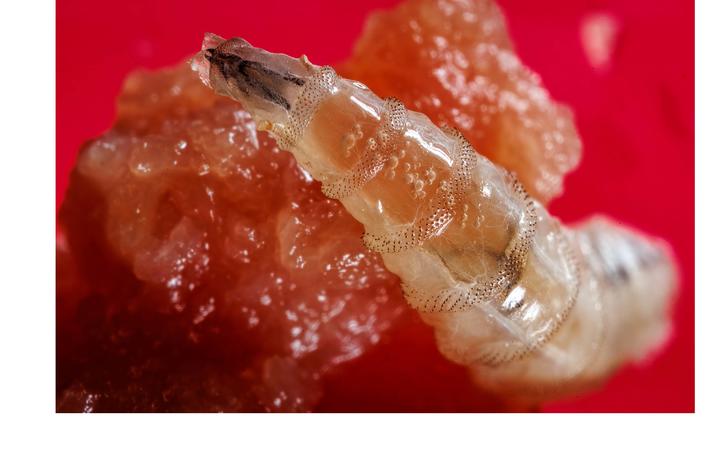
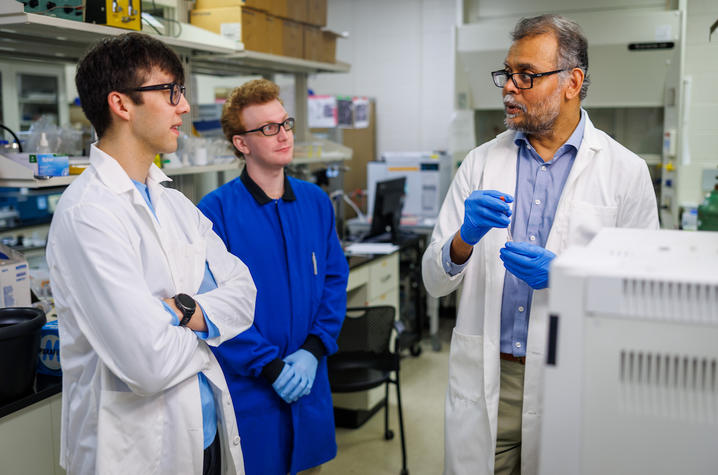
LEXINGTON, Ky. (Sept. 28, 2026) — Researchers at the University of Kentucky Martin-Gatton College of Agriculture, Food and Environment (CAFE) and the U.S. Agriculture Department have discovered that mating changes the chemical coating on the New World screwworm, a fly species with maggots that can cause serious tissue destruction and deadly diseases in livestock and other animals. The findings may help scientists better understand how the insects recognize mates and could provide leads for future monitoring and control methods.
“New World screwworms are not worms but the larvae of a parasitic fly known as Cochliomyia hominivorax,” said Zain Syed, Ph.D., an associate professor in the Department of Entomology who led the study published in the Journal of Medical Entomology. “Female flies lay their eggs in open wounds or natural body openings of cattle, horses, pets, wildlife and other warm-blooded animals. The larvae then burrow into living tissue and feed, causing painful wounds that can lead to serious infections or death if the infestation is not treated.”
The U.S. eradicated the pest in 1966 through a large program in which researchers raised and sterilized screwworm flies before releasing them into affected areas. When sterile males mated with wild females, the females produced eggs that did not hatch. Repeated releases gradually reduced the wild population.
The program eventually pushed the pest south through Mexico and Central America. A biological barrier of sterile flies in Panama helped keep screwworms from returning to areas where they had been eliminated. The U.S. also stopped a smaller outbreak in the Florida Keys in 2017. New World screwworm has since returned to parts of Central America and Mexico.
In June 2026, the USDA confirmed the first U.S. animal case associated with the current outbreak. The case involved a calf in Zavala County, Texas. Although the Centers for Disease Control and Prevention reports that the current risk to people and animals in the U.S. is very low, the outbreak has increased the need for dependable detection and control methods.
The paper examined chemicals found on the surface of adult screwworm flies. These waxy substances, known as cuticular hydrocarbons, help protect insects from drying out. They can also carry chemical information about an insect’s species, sex, age or reproductive condition.
“We found that males and females carry many of the same hydrocarbons, but in distinctly different proportions,” Syed said. “Mating further reshaped these chemical profiles, particularly in females.”
The analysis focused on 21 major hydrocarbon peaks that accounted for most of the chemical signal. The same major hydrocarbons appeared in males and females before and after mating. The important difference was the amount of each compound within the overall mixture.
The researchers found clear differences between male and female chemical profiles. Males had larger proportions of lower-molecular-weight hydrocarbons, and females had larger proportions of longer-chain compounds. Mating also produced significant changes in the chemical profile, with the strongest shifts appearing in females.
Many of the most-changed compounds were branched hydrocarbons. Similar chemicals play roles in mate recognition and reproductive communication in other insect species. The study did not test whether individual compounds changed screwworm behavior, so more research will be needed to determine what messages, if any, the chemicals carry.
The findings could help explain why female New World screwworm flies generally mate only once. Changes in their chemical profiles after mating may signal that they have already reproduced and discourage further courtship.
A better understanding of screwworm mating could also support the sterile insect technique. The method depends on laboratory-raised sterile males competing with wild males and successfully mating with wild females. Chemical profiles may eventually help scientists study mate recognition, evaluate the reproductive condition of flies or compare laboratory colonies with wild populations.
Federal and state agencies continue to monitor the current outbreak and prepare for possible additional detections. The USDA recommends that animal owners inspect wounds, watch for enlarging or foul-smelling sores and contact a veterinarian if they suspect New World screwworm.
The chemical patterns identified by Martin-Gaton CAFE and USDA researchers do not provide an immediate field solution to the outbreak. They do, however, add an important piece to scientists’ understanding of how New World screwworm flies communicate and reproduce. That knowledge may help guide the development of future tools to protect livestock, wildlife, pets and people.
“The exciting next step is to determine whether screwworm flies detect these chemical changes and whether they influence subsequent courtship and mating,” Syed said. “That knowledge could eventually contribute to better monitoring and control tools.”
Syed recently received a seed grant from UK’s One Health Initiative and the Martin-Gatton CAFE research office to continue New World screwworm trap development.
To learn more about the Department of Entomology at Martin-Gatton CAFE, visit entomology.mgcafe.uky.edu/.
This material is based upon work supported by the Agricultural Research Service, U.S. Department of Agriculture, under Agreement No. 58-3094-0-013, and by the National Institute of Food and Agriculture, U.S. Department of Agriculture, Hatch Project under award number 2353077000. Any opinions, findings, conclusions or recommendations expressed in this publication are those of the author(s) and do not necessarily reflect the view of the Department of Agriculture.
As the state’s flagship, land-grant institution, the University of Kentucky exists to advance the Commonwealth. We do that by preparing the next generation of leaders — placing students at the heart of everything we do — and transforming the lives of Kentuckians through education, research and creative work, service and healthcare. We pride ourselves on being a catalyst for breakthroughs and a force for healing, a place where ingenuity unfolds. It's all made possible by our people — visionaries, disruptors and pioneers — who make up 200 academic programs, a $1.02 billion research and development enterprise and a world-class medical center, all on one campus.