


UK SPARK Program announces 7th cohort
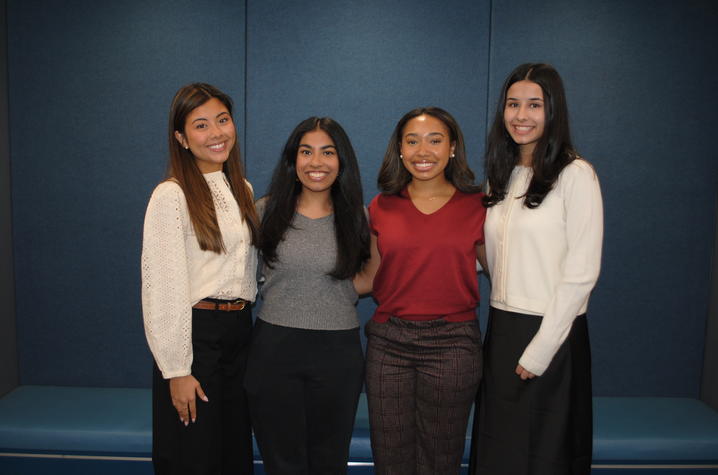
LEXINGTON, Ky. (Feb. 26, 2026) — The University of Kentucky’s Students Participating as Ambassadors for Research in Kentucky (SPARK) Program has named its seventh cohort.
Founded in 2019, the SPARK program trains undergraduate students from a broad range of backgrounds, experiences and communities to conduct impactful research to improve health disparities early in their college experience.
Students interested in the joining the program go through a rigorous application process. Accepted students, called SPARKlers, then complete a semester-long health disparities research course.
SPARK has supported 27 students since its inception. Through a generous donation from Aetna Better Health of Kentucky, the 2026 cohort includes four SPARKlers:
- Maiya Bhandari (Richmond, Kentucky), sophomore, public health and neuroscience major, pre-medical track
- Shreya Chandrashekar (Lexington), sophomore, public health and neuroscience major, pre-medical track
- Karmen Parker (Louisville, Kentucky), first-year, political science major, UK Blue pre-law program
- Isabella Skibba (Owensboro, Kentucky), sophomore, public health major, pre-law track
Students in this year’s cohort will partner with pre-matched UK faculty members to identify a research question and develop a project to answer it. Students receive summer funding to support their efforts on the project.
“The program offers the hands-on experience I need to translate research into meaningful change for communities facing systemic health challenges,” said Skibba, 2026 SPARKler.
After implementing the project, students meet with their mentors, undertake data analysis, and then write up, present and publish their research in professional settings.
Throughout the program SPARKlers learn how to develop and implement a health disparities research study, operate a budget, adhere to human subjects protection requirements and research integrity standards, and collaborate with community members.
In addition to research training, students receive professional development opportunities to support their futures in health-related careers and graduate studies. These activities include a health disparities book club, seminars on mentor-mentee relationships, academic belonging, physician-scientist careers and experiential research exposures to sites across Kentucky.
“SPARK felt like an amazing fit for my academic path because it directly connects public health research with my long-term goal of practicing medicine,” said Bhandari, 2026 SPARKler. “Through this experience, I hope to develop a strong public health mindset that helps me better understand the health disparities my future patients face. I am especially excited to learn how research can be used as a tool for advocacy and to create interventions that help close the gaps in health care.”
SPARKlers complete the program by presenting their research findings annually at the UK Center for Clinical and Translational Science Spring Conference.
SPARK is administered by the Center for Health, Engagement and Transformation and is supported by Aetna Better Health of Kentucky.
As the state’s flagship, land-grant institution, the University of Kentucky exists to advance the Commonwealth. We do that by preparing the next generation of leaders — placing students at the heart of everything we do — and transforming the lives of Kentuckians through education, research and creative work, service and healthcare. We pride ourselves on being a catalyst for breakthroughs and a force for healing, a place where ingenuity unfolds. It's all made possible by our people — visionaries, disruptors and pioneers — who make up 200 academic programs, a $1.02 billion research and development enterprise and a world-class medical center, all on one campus.