


UK research, new caregiver resource focus on quality of life in later stages of dementia
LEXINGTON, Ky. (Sept. 10, 2026) — Much of the progress in Alzheimer’s disease research in recent years has focused on preventing or slowing the disease in its earliest stages. But for millions of people already living with advanced dementia — and the families caring for them — another question remains: how can we make life better now?
Researchers and clinicians at the University of Kentucky’s Sanders-Brown Center on Aging are working to help answer that question through both research and caregiver support.
Recently announced results from the LiBBY clinical trial, which included participants in Kentucky, point to a potential new approach for managing agitation in people with late-stage dementia. At the same time, Sanders-Brown has launched CARE Compass, a new online resource designed to help families navigate the everyday challenges that come with caring for someone in the later stages of the disease.
Together, the efforts reflect an increased focus on preserving comfort, dignity and quality of life throughout the entire course of dementia.
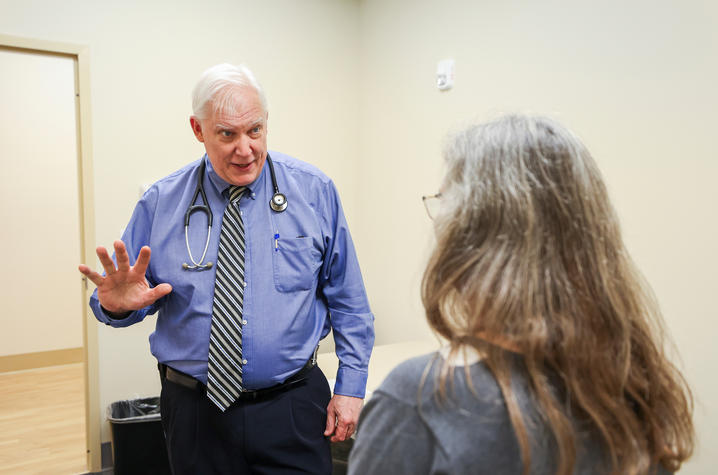
“We’ve seen a lot of Alzheimer’s research really move towards the early stages in terms of prevention, and that’s really left a huge hole in the field,” said Greg Jicha, M.D., Ph.D., director of clinical trials at Sanders-Brown. “We have limited options to provide quality of life, dignity and respect for those that are in the later stages of disease.”
Addressing agitation in late-stage dementia
One of the most difficult symptoms families may encounter as dementia progresses is agitation. It can include restlessness, pacing, repetitive movements or vocalizations, and verbal or physical aggression. Because people with advanced dementia may no longer be able to effectively communicate pain, fear or other unmet needs, agitation can sometimes be a sign of distress.
“Agitation is one of the primary issues that leads to decreased quality of life and excess caregiver burden,” Jicha said.
Existing medications used to manage agitation can carry significant risks, particularly for people who are older and medically vulnerable. That need for better options was part of the motivation behind the National Institutes of Health-funded and Food and Drug Administration-approved LiBBY Study. The phase 2, multicenter study examined the potential benefits of cannabis-derived treatments to address agitation and discomfort in patients with advanced dementia, a population with limited palliative care options.
The 12-week randomized, double-blind, placebo-controlled study included 120 participants. Sanders-Brown was among the academic centers participating in the trial, with Kentuckians taking part in the research.
“We were one of the top academic centers nationally participating in this study and had many people here in our local community engaged in the study,” Jicha said.
Results presented in July at the Alzheimer’s Association International Conference in London showed participants receiving the THC/CBD treatment experienced significantly greater reductions in agitation than those receiving placebo. Benefits were apparent within two weeks and continued through the end of the 12-week study. At week 12, 87.2% of participants receiving the treatment showed clinician-rated overall improvement, compared with 23.6% receiving placebo.
Jicha said the magnitude of the reduction in agitation was particularly encouraging.
“The effect was really an eight-point reduction in agitation scores,” Jicha said. “And that is quite striking.”
Researchers also closely monitored potential side effects, including excessive sleepiness and changes in behavior. Overall adverse-event rates were similar between the treatment and placebo groups, and investigators determined none of the serious adverse events reported during the trial were related to the study medication.
Jicha said reducing agitation without simply sedating patients is particularly important when the goal is improving quality of life.
“In essence, they were awake, alert, more comfortable and less agitated,” he said. “And this led to significant improvement in the caregiving quality of life that was also measured in the study.”
Jicha cautions that the findings should not be interpreted to mean that any cannabis or commercially available THC or CBD product will produce the same results. The trial evaluated a specific formulation and dosage of the two compounds.
The findings could instead provide a foundation for additional research, including studies examining whether similar approaches could be beneficial in other populations or at earlier stages of dementia.
“This really provides a new weapon in our armament to ensure quality of life, comfort, dignity and respect in the late stages of Alzheimer’s disease,” Jicha said.
Bringing research to families at home
The LiBBY trial also demonstrated something researchers say is important for the future of dementia research: people with very advanced disease can participate in clinical trials when studies are designed around their needs.
Many participants were cared for at home, and some had significant physical limitations that made traveling to a research center difficult. Sanders-Brown researchers adapted by taking the study to them.
“Our team went to people’s homes across the state of Kentucky, frequently driving two hours in each direction to meet with families that were interested in helping to participate and advance this science,” Jicha said.
That approach required researchers to consider not only the needs of participants but also those of the family members providing their day-to-day care.
“We have to understand the place where both the patient and the caregiver are and what their needs are if we’re going to be successful with continued investigations like this in the future,” Jicha said.
That philosophy also underlies Sanders-Brown’s new CARE Compass.
A compass for navigating later-stage dementia
Developed specifically for people caring for someone in the more advanced stages of dementia, CARE Compass provides practical information families can use as care needs become more complex.
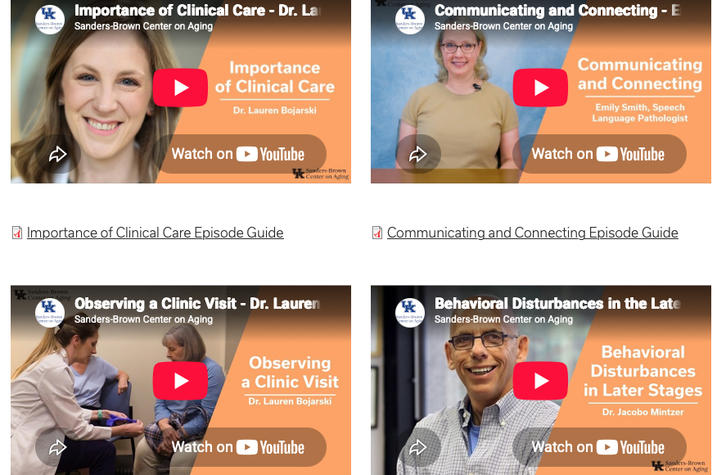
The free online program is organized around the four points of its “compass”: Care Needs, Activities, Resources and Education.
-
Care Needs: short videos and hands-on guidance addressing everyday challenges including bathing, dressing, positioning, hydration, mealtimes and caregiver rest
-
Activities: ideas for maintaining engagement and meaningful connections through approaches such as music, movement and calming techniques
-
Resources: printable checklists, caregiving instructions and connections to national organizations
-
Education: specialists discuss topics families encounter as dementia advances, including agitation, medical concerns and recognizing discomfort when a loved one may have difficulty communicating what they need
The program recognizes that there is no single roadmap for advanced dementia. The disease progresses differently for every person, and the challenges families encounter can change over time. CARE Compass is designed to give caregivers information they can return to as those needs evolve.
For Sanders-Brown, the LiBBY trial and CARE Compass represent two sides of the same commitment: continuing to search for better treatments while also giving families tools that can improve daily life right now.
For Jicha, that commitment is especially important for families who may feel that the focus on preventing and treating early-stage disease has left their loved ones behind.
“We’ve not forsaken their loved ones in the later stages of disease, nor have we forsaken the family members and caregivers that take on this tremendous task of love and commitment,” Jicha said.
Research reported in this publication was supported by the National Institute on Aging of the National Institutes of Health under Award Number R01AG068324. The content is solely the responsibility of the authors and does not necessarily represent the official views of the National Institutes of Health.
UK HealthCare is the hospitals and clinics of the University of Kentucky. But it is so much more. It is more than 10,000 dedicated healthcare professionals committed to providing advanced subspecialty care for the most critically injured and ill patients from the Commonwealth and beyond. It also is the home of the state’s only National Cancer Institute (NCI)-designated Comprehensive Cancer Center, a Level IV Neonatal Intensive Care Unit that cares for the tiniest and sickest newborns and the region’s only Level 1 trauma center.
As an academic research institution, we are continuously pursuing the next generation of cures, treatments, protocols and policies. Our discoveries have the potential to change what’s medically possible within our lifetimes. Our educators and thought leaders are transforming the healthcare landscape as our six health professions colleges teach the next generation of doctors, nurses, pharmacists and other healthcare professionals, spreading the highest standards of care. UK HealthCare is the power of advanced medicine committed to creating a healthier Kentucky, now and for generations to come.